The Great Ascent: The World’s Busiest Airport
Despite soaring gas prices, the ongoing war in Iran and other factors affecting travel, Hartsfield-Jackson Atlanta International Airport is staying focused on getting customers to their destination with minimal disruption.

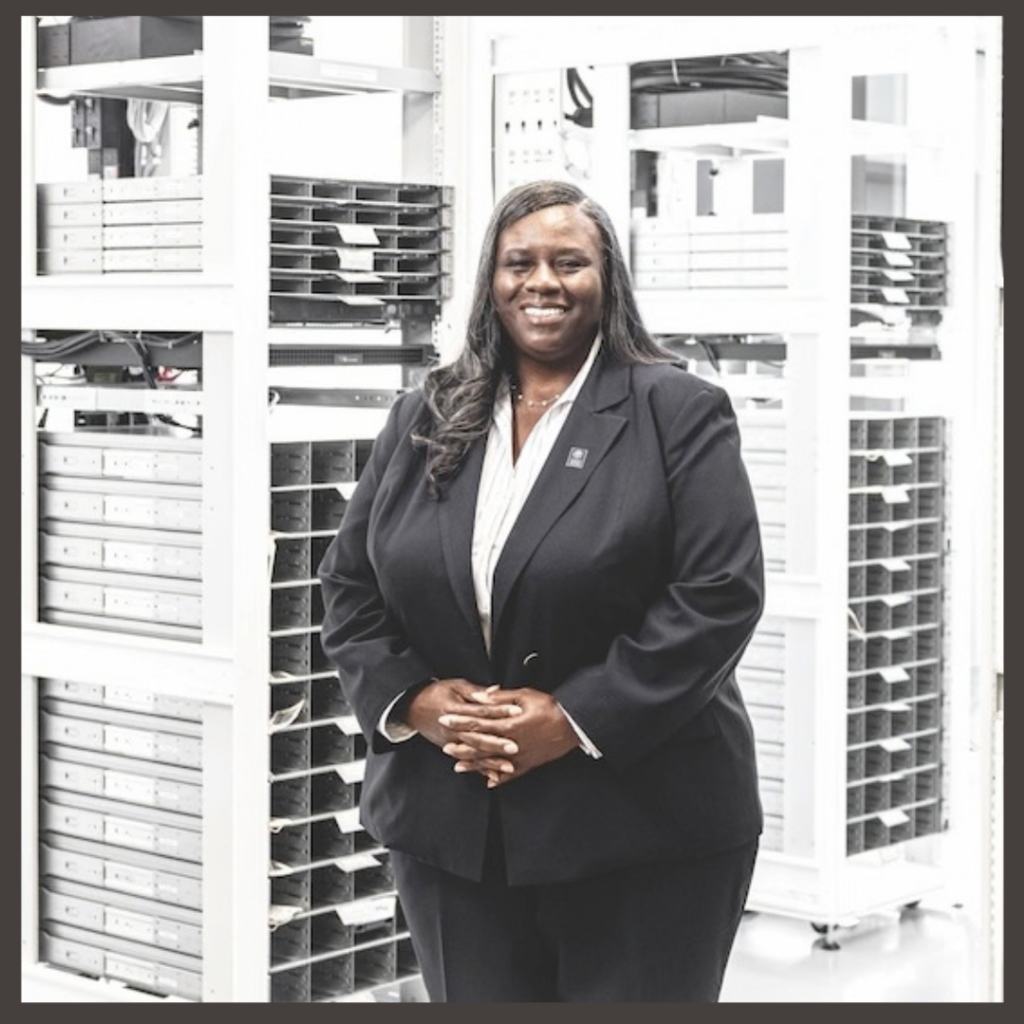
Aiming High: Ricky Smith, general manager for Hartsfield-Jackson Atlanta International Airport, stands in front of Atlas, a 14-foot-tall, LED sphere in the atrium of the domestic terminal. Photo credit: Daemon Baizan
On a weekday afternoon in June at the world’s busiest airport, Ricky Smith is tracing the chain of geopolitical cause and effect that made Spirit Airlines disappear a month earlier.
“The war in Iran had a profound effect on fuel prices, and you can attribute the demise of Spirit to that,” says Smith, the general manager of Hartsfield-Jackson Atlanta International Airport, a global gateway that generates more than $66 billion a year in economic impact for Georgia.
In a sense, Smith is the steward of a transportation city-state with 63,000 on-site workers and thousands more in the logistics and ancillary services orbit. It’s a place that seems to be in a constant state of expensive redevelopment – a massive transportation complex that can feel the crippling effects of conflicts on the other side of the planet.
For all the fuel shocks, geopolitical disruptions and billion-dollar construction programs, an airport’s reputation comes down to how it feels to the customer. Smith wants to push Hartsfield-Jackson’s reputation higher – and two mega-events have the potential to put that to the test.
Spirit was already flying on vapors when the war disrupted Middle Eastern oil production. After years of losses and a failed attempt to merge with JetBlue, Spirit couldn’t absorb the soaring fuel prices and ceased operations in May, eliminating about 17,000 jobs and stranding thousands of passengers.
“The airlines will tell you they’re already operating at pretty tight margins,” Smith says. “So we’re seeing fares rise and, in some cases, airlines are reducing frequencies or just not adding service because the operating cost is too high.”
Or in Spirit’s case, closing altogether. The loss of the ultra-low-cost airline is a subplot of a larger story at Hartsfield-Jackson: an airport balancing its role as a hub for Delta Air Lines while remaining a competitive marketplace for everyone else.
Delta is integral to the state’s economy, operating about 1,000 daily departures from Hartsfield-Jackson and employing more than 37,000 Georgians. After Spirit left Atlanta, vacating two gates, Delta offered $12 million to take over the space.

Improved Aesthetics: Phase 3 of the Concourse D widening phase, above, was completed in June and also extends the concourse’s exterior, below. Photo credit: Hartsfield-Jackson Atlanta International Airport

In a city where access to nonstop international flights matters almost as much as tax rates, Delta’s global network has brought corporate headquarters and Fortune 500 companies to Georgia. And Smith is unapologetic about the importance of the relationship.
“We always want our hub carrier to be strong and happy – it’s important to the airport and to our community,” he says, adding a second point: in a deregulated industry, airlines can choose where to operate.
“We’re equally committed to supporting the other airlines here,” he says. “In a deregulated industry, our role is to accommodate carriers from a facility standpoint whenever they decide to operate. We can’t turn an airline down.”
High-Flying Balancing Act
That balancing act is at the heart of modern Hartsfield-Jackson, which is confronting its own version of scarcity: There isn’t much room left to grow on a footprint surrounded by highways and dense development. The airport already handles about 108 million passengers a year, but the plan is to accommodate many, many more.

High-Tech Deck: The South Red parking deck, which opened in June, has technology that reads your license plate as you enter and exit the facility to calculate your parking fee. Photo credit: Hartsfield-Jackson Atlanta International Airport
“We’re going through a master planning process that will position us to handle up to 160 million passengers,” Smith says. “And we think we can achieve a lot of that growth within the existing campus.”
The plan calls for widening concourses, adding gates, expanding parking and widening terminal roadways – an exercise in densifying instead of sprawling.
Much of this is bundled into the ATL-Next capital improvement program, a long-term rebuild that has grown from a $6 billion plan to a roughly $20 billion investment extending through 2036 – infrastructure on the scale of a small city.
Concourse D, one of Delta’s primary concourses, has become an early symbol for the entire effort. Once among the narrowest and busiest at the airport, it had been stretched as far as incremental fixes would allow.
“It was too congested,” Smith says. “So we’re widening the concourse, improving the aesthetics.” Among those improvements are larger and brighter restrooms and larger seating areas adjacent to boarding gates with higher ceilings.
“We’re not doing this because of arbitrary quotas or politics. We’re building and supporting minority firms, something we’ve been doing well for decades.” – Byron Amos, City Council member, Atlanta
Those phases are rolling out in sections as Delta continues to run a heavy schedule from the concourse. The full $1.4 billion transformation is expected to wrap up near the end of the decade.
“Each time we open a new phase it’s been met with enormous optimism and excitement, because it truly transforms the experience in that concourse,” Smith says.
More than Moving People
In addition to moving more people from place to place, Hartsfield-Jackson ranks among the country’s most important cargo and logistics hubs, transporting about 650,000 tons of freight – shipments connecting Georgia manufacturers and farmers to global markets, supporting hundreds of thousands of jobs statewide.

Improved Experience: Biometric screening at security checkpoints is decreasing wait times for passengers. Photo credit: Hartsfield-Jackson Atlanta International Airport
With three cargo complexes and more than 2 million square feet of warehouse space, the airport has more capacity than demand, Smith says. He frames cargo as a latent asset – there’s plenty of space, so they’re upgrading the quality and efficiency to be ready as demand grows.
“We do have room to handle more air cargo capacity, so we’re working closely with our cargo carriers to refine their ability to operate more efficiently in the spaces they’re using,” Smith says. “A lot of our facilities are dated, so as part of our master plan, we’re looking at right-sizing those, making them best-in-class.”
Smith is also aiming to right-size the routines inside the terminals, where software, sensors and face scanners are enhancing security and improving the human experience.
Biometric screening at domestic and international checkpoints is already cutting wait times, and the airport has added an AI-powered camera network to monitor roadways, lobbies and other high-traffic areas in real time. The system helps security teams spot patterns – like unattended bags, unusual loitering, or sudden crowd surges – and flag them before they escalate into safety or congestion issues.
Smith sees the same tools eventually delivering a better read on passenger interests.
“AI gives us the ability to develop predictive behavior – how passengers want to negotiate the terminal, which concourses they prefer, which food and retail concepts they prefer,” he says. “The better we understand that, the better customer experience we can provide.”
Funding, Fairness and Security
The airport’s operational ambitions are playing out against a funding squeeze from the federal government. Last September, Hartsfield-Jackson surrendered $37.5 million in funding after refusing to give in to anti-diversity and inclusion conditions as directed by the Trump administration.

Studying the Screening Process: Byron Amos, the former chair of the Atlanta City Council’s Transportation Committee. Photo credit: Daemon Baizan
“We started planning for this kind of possibility from the federal government a few years ago,” says Atlanta City Council member Byron Amos, the former chair of the council’s Transportation Committee, charged with airport oversight.
An Atlanta native, Amos traces the city’s DEI stance back to airport namesake former Mayor Maynard Jackson, whose insistence on opening airport contracts to Black- and minority-owned firms reflected the city’s culture and helped define its economic identity.
“Replacing those federal aviation grants is very hard to do,” Amos acknowledges. So, to help manage the momentum, the council delayed or stretched out some construction projects and leaned on Atlanta’s AAA credit rating to refinance debt and generate replacement dollars – all while keeping those equity commitments intact.
“We’re not doing this because of arbitrary quotas or politics,” Amos says. “We’re building and supporting minority firms, something we’ve been doing well for decades.”
Amos also has suggested the airport explore a different kind of change. Drawing on the years he spent working overnight in aviation security, he proposed a 90-day feasibility study on privatizing security screening. The motivation is customer service: “The only thing we can say to a grandmother standing in line for hours is, ‘we’re sorry.’ That doesn’t sit well with me.”
“We’re going through a master planning process that will position us to handle up to 160 million passengers. And we think we can achieve a lot of that growth within the existing campus.” – Ricky Smith, general manager, Hartsfield-Jackson Atlanta International Airport
Customer experience is ultimately where Smith’s ambitions land.
The World Cup experience, spreading traffic across 30 to 40 days, was closer in rhythm to a Thanksgiving season, according to Smith. In contrast, the Super Bowl in February 2028 promises to compress everything into a few intense days – a different kind of test entirely.
Hartsfield-Jackson’s response involves ramping up customer experience teams, security, airlines and concessions, while also working to create a genuine sense of place: art, cultural showcases, local food and a new digital LED sphere in the domestic atrium. The 14-foot-tall structure, called Atlas, welcomes travelers with immersive art, as well as airport information.
For Smith, those touches aren’t window dressing; they’re the point of the whole enterprise.
“When I am done here, I just want to be recognized as someone who figured out a way to inspire the team to take our customer experience up a notch,” he says.