Connecting Education, Industry and Opportunity
Public-private partnerships are driving Georgia's workforce development strategies across sectors.
On July 1, a quiet but significant change marked the beginning of a “new era of partnerships” in how Georgia coordinates education and workforce policy. Of course, business and training have always been interconnected; every employer needs qualified employees. But when Gov. Brian Kemp signed the Education and Workforce Strategy Act (HB 1302) on May 11 and it went into effect a couple of months later, the Governor’s Office of Student Achievement became the Governor’s Office of Education and Workforce Strategy, ensuring a broader, more unified approach to creating and implementing workforce education policies and programs.

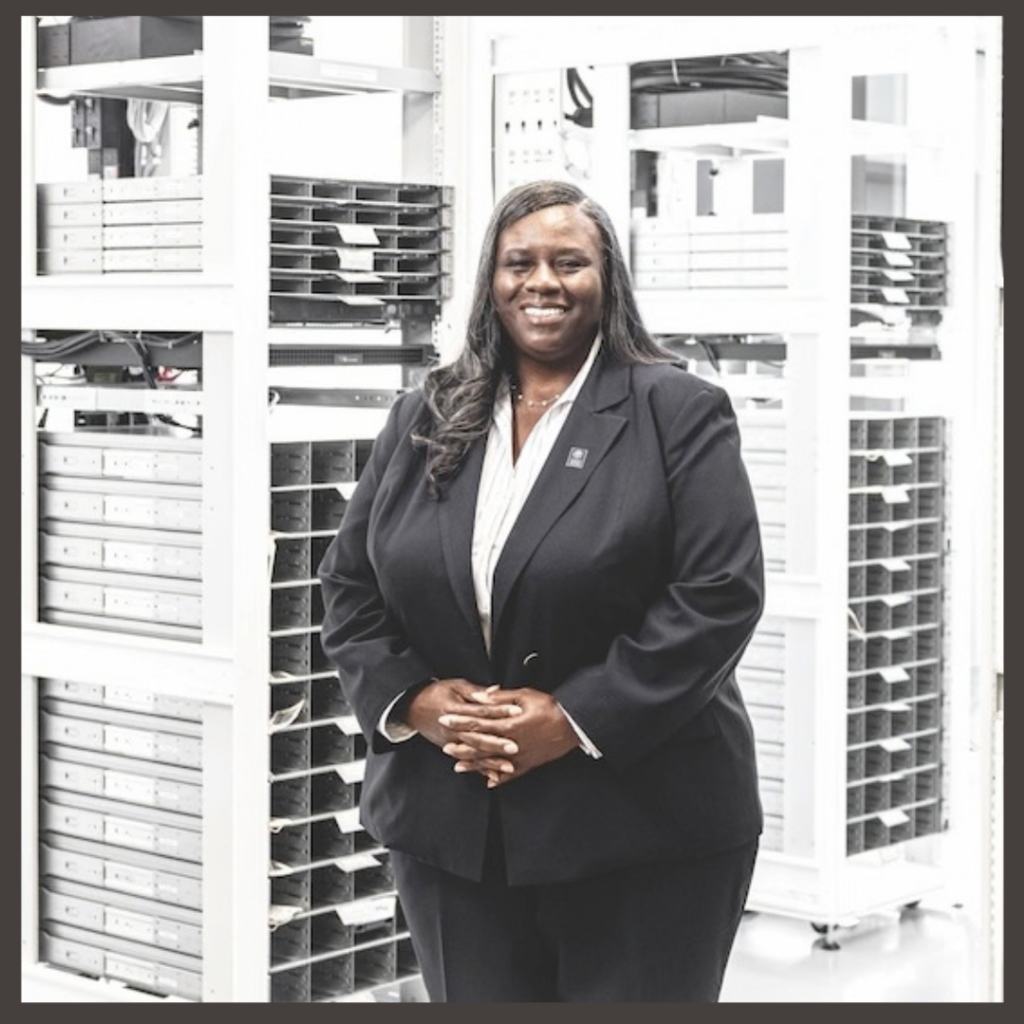
Preparing Students for Careers: Atlanta Technical College President Victoria Seals. Photo credit: Kevin Garrett
In partnership with the Technical College System of Georgia and the state Department of Education, the new office will shepherd the creation of an integrated state workforce development plan, streamlining the federal Workforce Innovation and Opportunity Act plan, which funds job centers for adults and laid-off workers seeking job training and certifications, and the Carl D. Perkins Career and Technical Education Act plan, serving high school and community college students by purchasing updated equipment for labs and workplace education and training for Career and Technical Education teachers.
In fact, connecting people with jobs is a key goal of the Georgia Department of Labor’s new strategic plan, which states the agency’s aim is to “strengthen its leadership presence through transparency, collaboration and meaningful partnerships.” That means the state will call on a robust network of employers, workforce boards and educators to train skilled workers who can take on the tasks needed by Georgia’s growing business community.

Unified Approach: Gov. Brian Kemp signed the Education and Workforce Strategy Act on May 11. Photo credit: Contributed
Investing in People and Job Creation
OpenAI, the artificial intelligence company behind ChatGPT, intends to build a $20 billion data center in an industrial park in Effingham County that it says will support thousands of construction jobs for electricians, equipment operators, mechanics, technicians and other skilled tradespeople needed to build the campus and its systems. Two Microsoft Datacenter Training Academies, one at Atlanta Technical College and the second at the Douglasville campus of West Georgia Technical College, are poised to fill those needs. It is a collaboration: Microsoft provides assistance with curriculum development and alignment, mentoring and real-world experience, along with scholarship opportunities that cover tuition, books, fees and certification testing costs, lowering the barrier to completion for many students. And the TA Digital Group partnered as the data center development arm of TA Realty.

Collaborative Effort: ATC President Victoria Seals, center, helped cut the ribbon in May for the school’s Microsoft Data Center Training Academy, in partnership with the TA Digital Group. Photo credit: Atlanta Technical College
The ATC Foundation chipped in, too, investing $800,000 in the Datacenter Training Academy, which Atlanta Technical College President Victoria Seals believes will lead to jobs for her students.
“Data centers represent a critical infrastructure for our modern economy,” says Seals. “We depend on it, and the workforce needed to build, maintain, secure and operate that infrastructure. It extends well beyond the technicians working in a single building. For us here at Atlanta Technical College, it’s not about preparing students for that one job; it’s about preparing them for careers in the entire digital infrastructure, the whole ecosystem.”
Seals has high hopes that the Datacenter Training Academy can help transform economic mobility for people from traditionally underserved communities, many of whom are ATC students. In 2025, more than 43% of ATC students were first-generation college students, 51.2% of its graduates were between 19 and 29 years of age, 80.3% were Black and 8.6% were Hispanic.
“My vision is for the Academy to become an entry point for … technology careers for [those] who have historically been left out of those opportunities,” says Seals. “Whether that’s Black and Latino students [and] women or adult learners, career changers and students from … lower-income communities. Success for us means more than just enrolling them. It means helping them complete the program, earn the credential, secure that employment and experience that long-term economic mobility for themselves and for their families.”
Delivering the Broader View
Longtime partners in workforce development, Georgia Power and the University of Georgia’s Carl Vinson Institute of Government teamed up in October 2025 to convene the Georgia Superintendent’s Workforce Leadership Academy, providing a cohort of 16 school superintendents with information, resources, coaching and experiences to advance workforce development in their communities.
“Superintendents play important roles in chambers of commerce, development authorities and communities, but a lot of our superintendents haven’t had any formal training in workforce development,” says Greg Wilson, associate director of UGA’s Carl Vinson Institute of Government, who leads the institute’s Workforce and Economic Development Division. “We provided them with a broader look at workforce development, anything from understanding the demographic, economic and workforce trends and how those might look in the state but also asking questions about how those trends might look in their communities and regions.”

Job Training: Brett Lacy is the workforce solutions managing director at the Atlanta Regional Commission. Photo credit: Kevin Garrett
The cohort included superintendents from systems of all sizes, ranging from Muscogee County, with more than 30,000 students, to Hart County, with just over 3,700 students. The participants toured the Kia Georgia manufacturing facility in West Point to get a closer look at 21st-century manufacturing and to hear from the leadership team and from Kia Georgia President and CEO Stuart Countess. He provided firsthand insight into what the company has learned about workforce development through years of partnering with neighboring communities. He also shared the details of the company’s career pathways, including job shadowing, internships and work-based learning. The superintendents attended the November 2025 Georgia Workforce Conference held at UGA and later met in person in Atlanta and virtually to discuss what they’d learned. They were also paired with peer mentors who helped them develop a capstone project to implement in their communities.
In addition to helping select the program’s participants and collaborating on curriculum content and design, the workforce development team at Georgia Power worked with the superintendents on communication strategies, audience awareness and refining messaging.
“The data means nothing if you can’t tell a story with it,” says Jonathan King, Georgia Power’s director of workforce development. “We spent time helping [the superintendents] take the information and craft a story on ‘why we should do something’ or ‘why we shouldn’t.’”
Georgia Power’s involvement in the Superintendent’s Workforce Academy reflects the company’s more systemic approach to workforce development.
“Several years ago, I would say workforce development and education were focused around awareness,” King says. “Letting people know what jobs are available or what skills you might need. I think we missed the mark there. We’ve shifted because of partnerships and pathways that we’ve created that actually built an end-to-end solution.”
Expanding Transportation Infrastructure
Building Georgia is a workforce initiative designed to expand the state’s infrastructure construction labor force, which is expected to grow exponentially over the coming decade.
Now in its third year, the program is in full-scale pilot implementation mode. The first cohort of up to 20 students finished in late spring, with a second cohort following. The program runs about eight weeks, from the applicant filling out a contact form on the Building Georgia website to the new graduate connecting with an employer. For qualified candidates, Building Georgia covers all training costs and provides a stipend to lower the barrier to entry for many participants.

Foot in the Door: Building Georgia, a workforce initiative that gives students hands-on training graduated its first cohort in June 2026, above and below. Photo credits: Contributed

“We’ve heard from some of the students that without that stipend, they would not have been able to consider this career change,” says Brett Lacy, Atlanta Regional Commission workforce solutions managing director. “We’re training these individuals for jobs that are immediately needed on highway construction sites. They are a foot in the door into the industry, and the training doesn’t stop at the end of the six weeks. A lot of these job sites provide tremendous career opportunities.”
Building Georgia was launched in response to tens of billions of dollars in federal investment earmarked for infrastructure development projects under the November 2021 Infrastructure Investment and Jobs Act. It is a collaboration among the ARC, which serves as the program’s facilitator; the Technical College System of Georgia, which provides training at either Atlanta Technical College or Gwinnett Technical College; and the Georgia Department of Transportation, which has committed to meeting with individuals who complete the training.
Support Systems
In 2025, Georgia’s Latino population was estimated at about 1.2 million residents, or 12% of the state’s total population, according to U.S. Census Bureau data. Many younger members of that community, especially those born and educated in the U.S., have different ideas about what’s available to them after high school, yet often feel compelled to conform to cultural norms. College isn’t a foregone educational conclusion or a place to discover your life’s passion.
“There’s a lot of intergenerational living, there’s a lot of pressure, especially on young men, to go to work,” says Sergio Marquez, CEO of the Latin American Association, an organization working to lower barriers to economic mobility and prosperity for the Latino community. “If the parents don’t have formal education, there’s a lot of tug and pull to help out the family.”
“We’re training these individuals for jobs that are immediately needed on highway construction sites. They are a foot in the door into the industry, and the training doesn’t stop at the end of the six weeks. A lot of these job sites provide tremendous career opportunities.” – Brett Lacy, workforce solutions managing director, Atlanta Regional Commission
In addition to working with the broader community, the association works with families of high school students to help them see the value of education beyond K-12, whether that’s technical college, a traditional four-year college or an apprenticeship.
“Our Youth Services department helps identify and support college-bound kids, giving them all the support we can, not just helping with the financial piece, but the room and board and surviving college,” says Marquez. “We help the family get comfortable with it.”

Higher Education Help: Sergio Marquez, CEO of the Latin American Association. Photo credit: Kevin Garrett
The Latin American Association also partners with UnidosUS, a national Latino organization, and the Center for Energy Workforce Development on ELEVA (Exito de Latinos Educated Via Apprenticeships), an eight- to 10-week pre-apprenticeship program that prepares young people to enter Registered Apprenticeships in high-demand, energy-related careers. Earlier this year, in partnership with Georgia Piedmont Technical College, the association assisted several students pursuing HVAC credentials. A win for them, a win for the workforce.
Partnering with The Home Depot, the Latin American Association uses the Path to Pro program to upskill and certify construction subcontractors. Marquez also notes that 76% of his group’s clients are women seeking business opportunities to support their families. Happy to oblige, the organization offers resources, including microloans, to support women-owned businesses.
Amping Up the Aviation Workforce
Aviation and aerospace manufacturing is Georgia’s largest manufacturing sector, generating $57.5 billion in annual economic impact and supporting more than 200,000 jobs statewide, according to research from Georgia Tech. However, there are mounting concerns about the future of the aviation workforce.
“Georgia will not meet its workforce needs with people who are associated with the aviation industry,” says Adon Clark, dean of Middle Georgia State University’s highly respected School of Aviation. “We have to reach out to those who have never considered aviation as a career pathway.”

Creating Opportunities: Gulfstream President Mark Burns, holding oversized check, with representatives from the University of Georgia, Savannah Technical College, Middle Georgia State University, Savannah State University, Georgia Tech, Georgia Southern University, Mercer University and the Savannah-Chatham County Public School System. Photo credit: Contributed
For Clark, that means exposing students to aviation careers earlier and more often. Usually, the university hosts Sky Camp, a summer career camp for kids ages 10 to 14. Students are exposed to a host of aviation experiences to whet their appetite, including building and launching rockets and gliders, flying in a simulator and flying in an aircraft. This year’s camp was canceled due to construction and renovations on campus.
Clark and other instructors have hosted and visited student groups, discussing potential aviation jobs beyond high-profile roles like pilots. The state desperately needs people to work as aircraft maintenance technicians, air traffic controllers and in aircraft structural technology.
Middle Georgia’s program is approved by the Federal Aviation Administration and formally accredited by the Aviation Accreditation Board International. Although it’s a moderately sized public university, it is on par with higher-profile institutions, including private schools offering similar aviation programs, which Clark says wouldn’t be possible without the support of generous partners as well as the legislature.
“Our industry advisory board is made up of people from Delta, Gulfstream, Robins AFB, Lockheed, a bunch,” says Clark. “They evaluate our curriculum, our facilities, our equipment, and we meet twice a year for them to provide feedback.”

Talent Pipeline: Adon Clark, dean of Middle Georgia State University’s School of Aviation. Photo credit: Contributed
Based on industry feedback, course material may be altered slightly or significantly, as in the school’s air traffic control program, which underwent a complete revamp this past year to meet the requirements of the Enhanced Air Traffic Collegiate Training Initiative. The program allows qualified students to transition more quickly into the air traffic control workforce since they do not have to attend the FAA academy for training, meeting a key industry need.
In May, Middle Georgia State University was one of several education partners on hand at Gulfstream’s Savannah headquarters as the company renewed its $5 million investment to bolster every level of education, from Savannah-area schools to technical colleges and universities.
“Gulfstream’s annual $5 million investment in Georgia education helps strengthen aviation and workforce development programs across the state, creating opportunities for students while building a pipeline of skilled talent to support the future of aerospace innovation,” said Gulfstream President Mark Burns via email. “As a company headquartered in Georgia for nearly six decades, we’re proud to be part of this effort.”
A Shared Understanding
Technology, manufacturing, construction and aviation manufacturing share core problem-solving and safety capabilities but differ in their focus on specific industry sectors. They also each share a commitment to creating a sustainable framework for employment. By supporting and connecting with high schools and colleges, state and local agencies, and other community partners, they help fuel the workforce pipeline.
“Having a shared understanding among partners and entities that each contribute to the state’s workforce makes us a Top State for Talent and a Top State for Economic Development,” says UGA’s Wilson. “That shared perspective on how the system works and an understanding of where the opportunities are to partner and engage with the workforce ecosystem have been a big takeaway.”