Liberty County: A Celebration of Liberty
History, Collaboration, Military Base

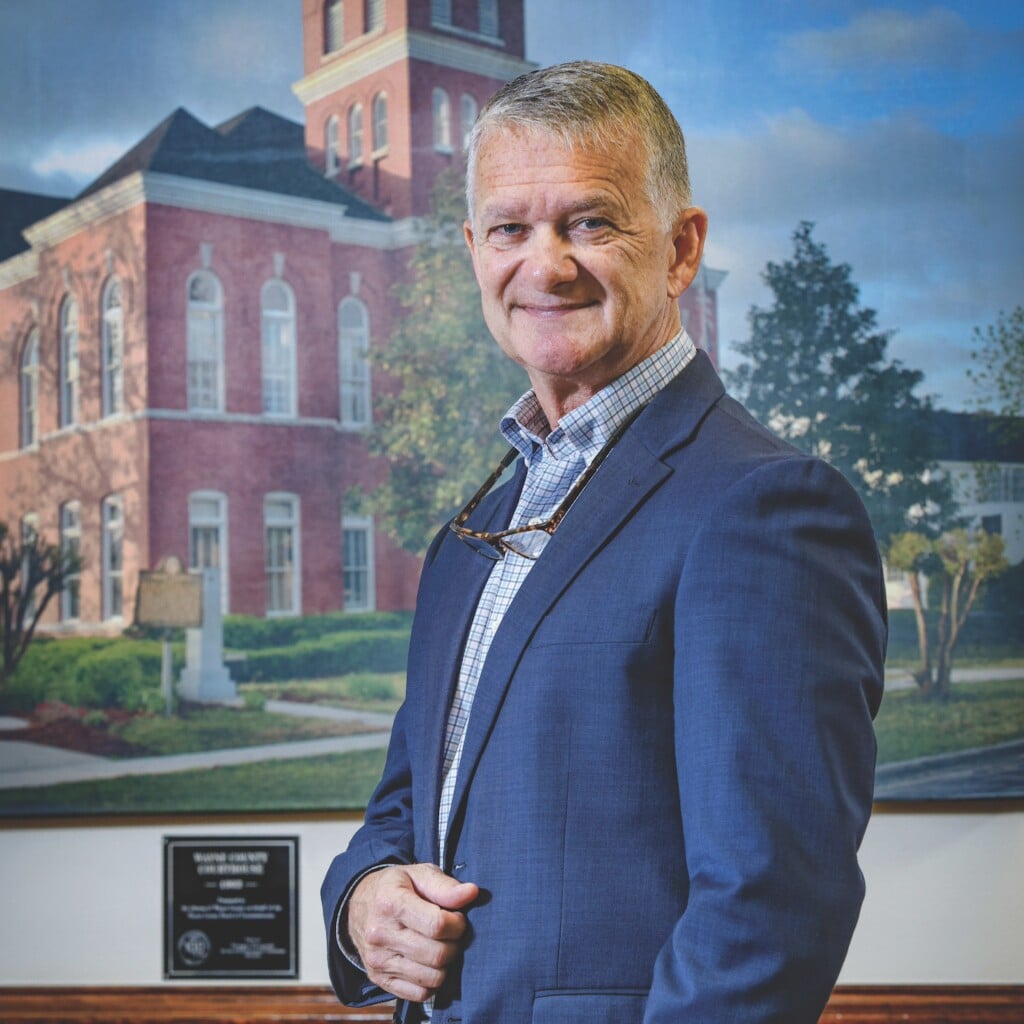
Ready for New Industry: Al Williams, chair of the Liberty County Development Authority, also represents the area in the Georgia House of Representatives (D-Midway). Photo credit: Frank Fortune
When the nation celebrates its 250th anniversary this month, perhaps Georgia’s share of the cheers will be a little louder in Liberty County. After all, three of the 56 signers of the Declaration of Independence were from Georgia, and two of them – Button Gwinnett and Lyman Hall – lived in Liberty County. The county, originally known as St. John’s Parish, doubled down on that revolutionary fervor just a year later when it renamed itself Liberty in 1777, a bold move considering that the bulk of the Revolutionary War was still ahead. That warrior ethos remains: The dominant driver of the Liberty County economy is the U.S. Army’s Fort Stewart – the largest military installation east of the Mississippi River.
 Liberty County’s economic developers want more and better jobs with higher pay, a stronger tax base and a more diversified economy. The county’s rich history is the first among many assets that it could capitalize on as it pursues those goals.The industrial scene in Liberty County has swung between good news and bad news in the past few years. International Paper shut down its Riceboro containerboard plant last September, costing some 340 Liberty County jobs. The decision marked the end of decades of stable employment in the paper industry and also decimated the area’s forestry market. On the other hand, Liberty County got a share of the bounty represented by Hyundai Motor Group Metaplant America when Seohan Auto Georgia announced in 2023 that it would locate its factory – making shafts, axle and brake systems – in Liberty County. The Seohan plant represents modern manufacturing, with 60 positions filled at present and the promise of more to come.

Modern Manufacturing: The opening of Seohan Auto Georgia’s plant represents a $72 million investment. Photo credit: Contributed
“The jobs at [International Paper] were well-paying jobs, great jobs with great benefits, so while quite a few of those people have found jobs, not everybody got the same level of jobs and benefits. We’re hoping to fill that hole with the very aggressive recruitment of new industry and we know that, with the way things are growing in Southeast Georgia, industry is out there. We’ve just got to make sure we’re ready to attract it,” says state Rep. Al Williams, who chairs the Liberty County Development Authority.
Kevin Keunheung Lee, HR and safety director at the Liberty County Seohan plant, says the current 60-worker staff will expand to 270 “in the near future.” That represents a significant increase from the 180 jobs specified when the plant’s location was announced.
The $72 million investment from Seohan is not alone. The county has also attracted warehouse space as part of the Georgia-ports-to-interstate highways logistics boom. Toymaker Hasbro cut the ribbon in March on a 600,000-square-foot facility in Midway it dubbed “our flagship U.S. distribution center.” The company says the facility accounts for between 60 and 70 jobs and will grow to as many as 125 as holiday orders from stores peak.
Keeping an Eye on ALICE
What’s driving the new sense of urgency in economic development in Liberty County? Williams chalks it up to ALICE.

Cooperation, Not Competition: Brynn Grant, CEO of the Liberty County Development Authority. Photo credit: Frank Fortune
ALICE is an acronym for Asset-Limited, Income-Constrained, Employed, a term initially coined by a New Jersey United Way agency and since popularized across the country. It describes people and households who earn more than the federal poverty level but still struggle to afford basic housing, food, healthcare, taxes, etc. ALICE policymakers came up with a “dashboard” utilizing U.S. Census data and localized cost-of-living figures to determine who meets the ALICE threshold.
“It was a real wake-up call for a lot of us,” Williams says. “We don’t like our numbers under ALICE. With ALICE, we’ve got a 54% poverty rate overall.”
This more realistic lens for looking at affordability has prompted the Liberty County Development Authority to venture into territory outside the usual agenda for economic developers, Williams says – into topics like literacy, childcare and even water reclamation. With sewer capacity limiting future potential development, the development authority is looking to develop or co-develop a modern water reclamation facility.
Brynn Grant, CEO of the development authority, says part of the new way of doing things is cooperation, not competition. For that, economic developers in the area looked at the success of the Savannah Harbor I-16 Corridor Joint Development Authority, which pooled the efforts of Bryan, Bulloch, Chatham and Effingham counties to court the Hyundai plant. Now, three coastal counties along the Interstate 95 corridor – Liberty, Long and McIntosh – are trying the same approach.

Logistics Boom: Toymaker Hasbro opened a new 600,000 square foot distribution center in Midway. Photo credit: Contributed
“I think the three counties realize that we should have this partnership to seize opportunities and to work collaboratively when there is an economic development opportunity of such significance that maybe it requires or would be helpful for the three of us to be working together,” Grant says. “We finally decided to formalize that agreement rather than wait for something to happen and then have to rush through all of that process.”
The result is the Tri-95 Joint Development Authority, which held its first meeting last summer and is available to go into action if and when a massive regional project is proposed.
Powerful Fort Stewart
It would be difficult to overstate the importance of Fort Stewart to Liberty County and to Hinesville, the county seat. After all, it has a $5.8 billion impact on the area, according to a report from Georgia Southern University’s Center for Business Analytics and Research dated October 2024. The “people” numbers are just as impressive: approximately 25,000 active-duty soldiers, plus dependents, 4,000 civilian employees and 20,000 military retirees who receive services there. Some soldiers and their families live on base, while about 70% are scattered in Liberty and surrounding counties.
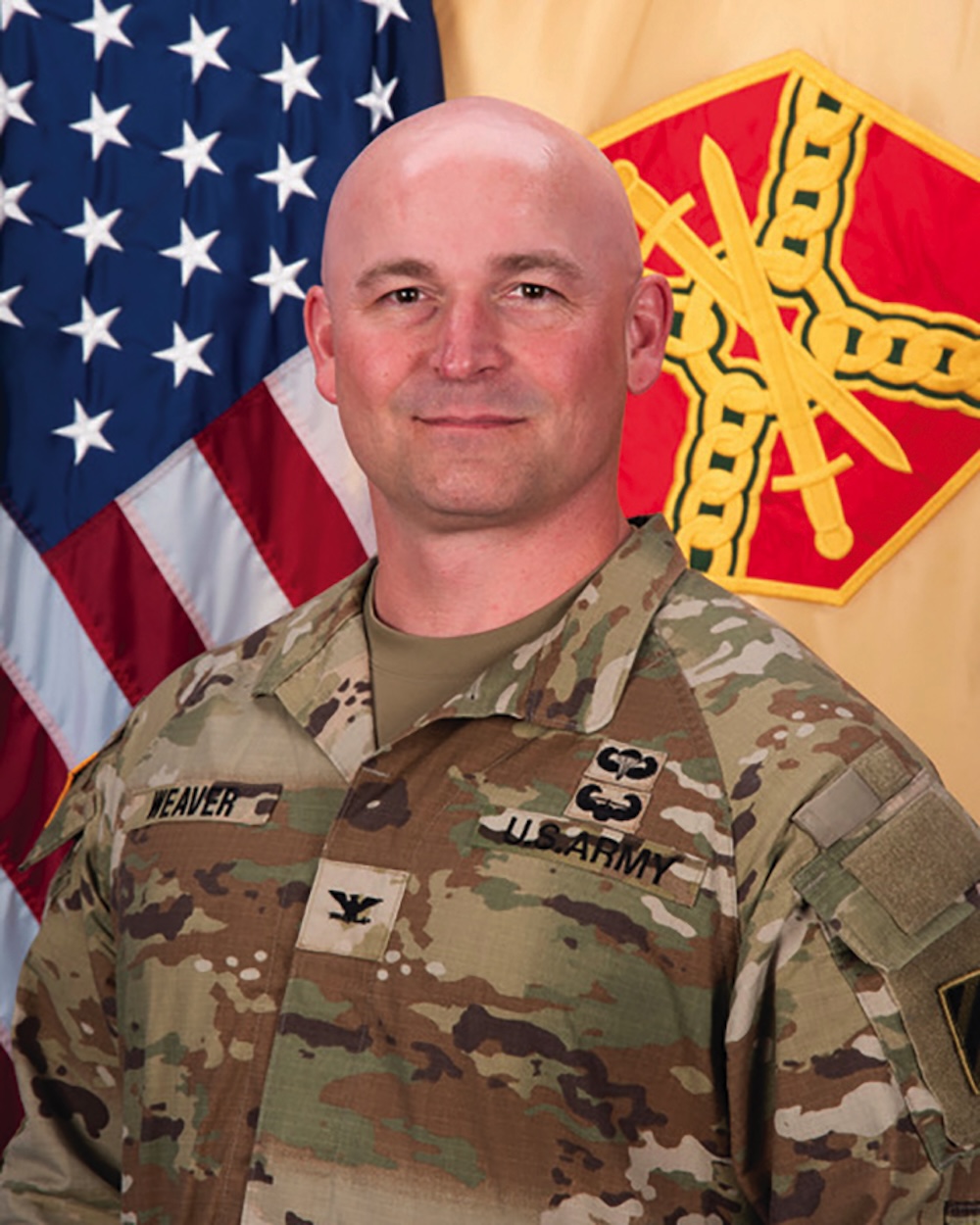
Welcoming Community: Col. William “Gabe” Weaver, garrison commander at Fort Stewart. Photo credit: Contributed
With numbers like that, it’s hardly surprising that military and civilian life in Liberty County are often intertwined.
“Our relationship with Fort Stewart is fantastic. We have standing meetings and partnerships. We don’t make a lot of decisions that we don’t run through the filter of ‘How will this affect the base?’” says Karl Riles, mayor of Hinesville. “These are our neighbors; these are our friends. You can’t just stick a sign at the edge of your community that says Home of the 3rd [Infantry Division] and not provide services that show you want this to be their home and to share in it.”
Col. William “Gabe” Weaver, about halfway through his two-year assignment as garrison commander at the base, acknowledges he hasn’t encountered many military communities that aren’t welcoming, but says Hinesville seems to go the extra mile.
“When I took this job, I found out I was on the school board; I found out I was on the development authority,” he says.
Hosting a massive military base comes with its own downside and upsides. The downside comes when a major deployment draws down the base population. The perks include things that would otherwise be outside the reach of a smaller city. The perfect example is the MidCoast Regional Airport at Wright Army Airfield, a general aviation airport, meaning it doesn’t host scheduled passenger service. The airport operates under a joint management board, with half the facility dedicated to the military and the other half to civilian use.

Military Impact: Fort Stewart, home to the U.S. Army 3rd Infantry Division. Photo credit: Frank Fortune
Benefits of the joint arrangement? MidCoast is staffed with air traffic controllers (civilian employees of the military) during the week and is protected by a professional airport fire department – amenities that would be beyond the financial reach of the typical small airport, says Sean Heath, owner of Heath Aviation, which was contracted to grow the FBO (fixed base operations) – the fuel and mechanical services at airports.
The airport is a cooperative effort by the Liberty County Board of Commissioners, the city of Hinesville, the Liberty County Development Authority, and the U.S. Army. In 2007, the three local governments partnered to build the 13,825-square-foot terminal building. The airport also boasts hangars. (Currently all are booked.)

Small but Mighty: MidCoast Regional Airport at Wright Army Airfield. Photo credit: Contributed
The airport’s clientele is a mix of corporate pilots, weekend fliers, flight instructors and their students, the Georgia Forestry Commission and various charters, including some carrying passengers bound for Dorchester Shooting Preserve, Heath says. He points out that general aviation goes well beyond mere hobbyists’ interests to corporate aviation and tourism.
Other tangible benefits from being a military community include access to the Georgia Department of Community Affairs’ Military Zone job tax credits. In the eligible census tracts, state tax credits of $3,500 per new job created are available. “We are grateful for this state program,” Grant says.
But the biggest upside of an economy nestled among a massive military base is a topic at the top of every community’s “challenge” list – workforce. Military spouses offer a ready-made workforce, and although they move because of military orders every few years, newly assigned families come into the area. And the Army estimates that 4,000 soldiers per year – new retirees or those changing careers – enter civilian life via Fort Stewart, and many of them choose to stick around.

Satellite Campus: Georgia Southern University students at the Liberty campus in Hinesville. Photo credit: Georgia Southern University
When it comes to post-secondary education, Liberty County is well served, with satellite campuses for both Georgia Southern University and Savannah Technical College.
The enrollment at Georgia Southern’s Hinesville campus is about 500. “Our military-connected population makes up about 55% of our total student population here,” notes Chanté Baker Martin, director of the campus. “Military-connected” is a category that covers soldiers, their family members and retirees. Students can earn two associate degrees, or a Bachelor of Interdisciplinary Studies, and can then transfer to Georgia Southern’s Armstrong Campus in Savannah, about 50 minutes away, or the main campus in Statesboro, just over an hour away. On the base itself, at the Army Education Center, Georgia Southern offers four master’s degrees, including an MBA.
At Savannah Tech’s Liberty County campus, last fall’s enrollment was 829, and about 300 of those were affiliated with the military in some way. Dual enrollment with the public schools’ College and Career Academy accounted for another 211. Among the more popular programs are nursing, HVAC and commercial truck driving, but that’s just part of 17 degrees and 59 certifications specifically offered at the Liberty Campus in addition to the numerous online options.
Adding to Local Assets

Downtown Improvements: Hinesville Mayor Karl Riles at the splash pad in Bradwell Park. Photo credit: Frank Fortune
Hinesville features a sprawling and diffused downtown, parts of it sparkling from recent upgrades to public assets. Improvements in recent years include a new justice center, new city hall, environmentally friendly streetscapes and the planting of crape myrtles. In addition, Bradwell Park has a splash pad for children and hosts block parties monthly throughout spring and summer.
“We spend a lot of time courting new retail with our Downtown Development Authority,” says Mayor Riles.
Marcus Sack, chair of the Hinesville Downtown Development Authority, says the challenge is to develop a social life for downtown. “Our main focus is something that makes our downtown alive after five,” he says.
The development authority brings the usual tools to the table: façade grants and a revolving loan fund that recently made its first loan, to a local bakery.
“One of the things we are working on creating this year goes along with the revolving loan fund,” says Sack. “We have put together a grant for a commercial grade restaurant hood, which is one of the most expensive pieces of equipment for starting a restaurant.”

Critical Access Hospital: Liberty Regional Medical Center. Photo credit: Contributed
Sack describes the authentic German restaurant Zum Rosenhof as “a jewel of our downtown,” and notes that a brewpub, The Parrot and Frog, opened in 2023. There is also the waterfront Sunbury Crab Company. One of the newest additions is a local coffee shop, Sunbury Coffee Bar, located downtown, which opened in October.
The coffee shop is the project of three sisters, Liberty County natives with varied careers who found themselves all living back in their hometown at the same time and decided to go into business together. Jolonda Greene, Krystal Hart and Yolanda (Joy) Britton set up shop in a mid-century modern home they converted (slightly) to house events on nights and weekends and a coffee shop on weekday mornings.

Honoring a Freedom-Fighter: Leah Poole, president and CEO of the Liberty County Chamber of Commerce and Convention and Visitors Bureau, at Susie King Taylor Freedom Park. Photo credit: Frank Fortune
Liberty Regional Medical Center is another solid asset available to the community. The hospital, identified as a Critical Access Hospital through a federal designation that aims to protect access to hospital care in rural areas, offers 25 inpatient beds and an 18-bed emergency room that recently cleared its probationary period as a Level IV Trauma Center.
“We are the busiest critical access ER in Georgia. We treated 33,000 patients last year in the emergency room, and that was a 4% increase from the year before,” says Derek Rozier, CEO of the hospital. “With the growth that Liberty County has seen, as well as being off I-95, we get a lot of traumas from the interstate.”
The demand for emergency services prompted the hospital to seek the voluntary trauma center designation, which involves extra educational and staffing requirements to ensure that it can either handle trauma patients or prepare them for transport to larger trauma centers – in Liberty’s case, primarily in Savannah.
A Natural Appeal for Tourists

Boat Excursion: Slack Tide Tiki offers tours of local waters and barrier island beaches in a catamaran topped with a thatched tiki hut. Photo credit: Contributed
Liberty County’s tourism is a low-key blend of history, natural beauty and active outdoor recreation. Assets range from the exclusive Dorchester Shooting Preserve, which has offered high-end quail and pheasant shooting for over a quarter of a century, to Slack Tide Tiki, which offers tours of local waters and barrier island beaches via a 23-foot catamaran topped with a thatched tiki hut.
“Liberty County really leans into a mix of coastal outdoor recreation, deep history and military heritage – things like Fort Morris, Dorchester Academy, Susie King Taylor Freedom Park at Jones Creek, kayaking and birding along our waterways,” says Leah Poole, president and CEO of the Liberty County Chamber of Commerce and CVB.

Lively Locale: Marcus Sack, chair of the Hinesville Downtown Development Authority. Photo credit: Contributed
“On lodging, we’re primarily a hotel market with a strong mix of national brands, some budget motels and a small number of historic or B&B-style properties. We don’t have a big campground like some coastal destinations, but our short-term rental network is strong. And because of our location and the way we package itineraries, we do see a lot of day-trippers and short stays, in addition to overnight visitors – especially those traveling the coast or connected to Fort Stewart,” she says.
In April, the Liberty County Board of Commissioners dedicated the Susie King Taylor Freedom Park at Jones Creek, honoring a local figure whose story has only recently received the place in history she earned. Susie King Taylor was born into an enslaved family on Liberty County’s Isle of Wight – now known as Midway – and escaped to freedom via local waterways at the site of the park. She went on to serve as the first teacher of formerly enslaved Black children, the first Black nurse in the Union Army, and later, as a social justice advocate. She also wrote and self-published a memoir of her experiences, the first Black woman to do so.

Commemorating a Local Heroine: Liberty County Commission Chair Donald Lovette, in front of the flag, (holding scissors) surrounded by other local officials at the April ribbon cutting of Susie King Taylor Freedom Park. Photo credit: Bunny Ware
The park, previously known as Jones Creek Park, had fallen into disrepair. Its redevelopment is being done in phases. The first phase added a playground, pavilion and parking. The next one will add additional features, such as a statue of Taylor holding a lantern.

Storefront Museum: Hermina Glass-Hill established the Susie King Taylor Women’s Institute and Ecology Center, a two-room museum of artifacts. Photo credit: Contributed
Meanwhile, historian Hermina Glass-Hill has established the Susie King Taylor Women’s Institute and Ecology Center, a two-room storefront museum of artifacts from Taylor’s time period and exhibits on her life. Currently it is not open during regular hours, but you can arrange a viewing by appointment via the website.
“This museum is the only museum in the country that is solely dedicated to Susie King Taylor’s life and memory, and we are very proud of that,” says Glass-Hill.
And so, history comes full circle, from signers of the Declaration of Independence 250 years ago to the belated honors bestowed on a formerly enslaved freedom-fighter.
Local Flavor
Lessons in Liberty

Hometown Story: Kay Flowers Johnson wrote, directed and produced the documentary Dorchester Academy: A Legacy of Liberty, which was executive produced by Brynn Grant. Photo credit: Frank Fortune
Documentary subjects often take circuitous routes to get to the screen. Take Liberty County’s role in the Civil Rights Movement, detailed in the short documentary Dorchester Academy: A Legacy of Liberty. When Liberty County Development Authority CEO Brynn Grant, a tireless promoter of her county, learned how this historic school for Black students played a central, if largely unknown, role in the Civil Rights Movement, she resolved to get a key participant on film.
Time was not on her side. Andrew Young – former ambassador to the United Nations, former mayor of Atlanta and former head of the Southern Christian Leadership Conference – is now 94 years old, the last of the iconic figures who had been involved at Dorchester alongside Martin Luther King Jr., Septima Clark and others.
The boys’ dormitory at Dorchester Academy closed with the school in 1940 but evolved into a community center for the surrounding Black community. When the Southern Christian Leadership Conference needed a home for its citizenship education program, the dorm rooms, auditorium and dining hall fit the bill perfectly.
“For almost 10 years during the Civil Rights Movement, Black Americans came from all over the South to learn about the Constitution. They learned the principles and tactics for nonviolent response to violence. They learned how to respond when they were asked to perform ridiculous tasks or answer unknowable questions at the polls, like how many jellybeans are in a Mason jar,” Grant says.
The Dorchester Improvement Association is the caretaker for the site and the museum, as well as sponsor of several events that open the dormitory – the only surviving original building from the school – to the public.
Grant wanted to get Young’s memories of Dorchester Academy on film, so she turned to someone she had grown up with. Kay Flowers Johnson was a Liberty County television journalist who moved up through various markets to a 19-year stint as reporter and anchor for Atlanta’s 11Alive. She moved on to her own video production studio in 2007. And sure enough, Johnson knew someone who could get word to Young, who was eager to talk about Dorchester Academy.
Dorchester Academy: A Legacy of Liberty has had screenings in Liberty County, along with showings in Savannah at Georgia Southern University Armstrong Campus and Savannah State University. There is also a screening at the Senior Citizens Inc.’s Learning Center July 22. Flowers Johnson is now working on getting it entered in film festivals and competitions around the Southeast.
“I just feel like it’s part of the blessing of this opportunity to tell a story that’s something that happened in my little hometown county, something that developed world-changers and ultimately changed the world. It’s just remarkable,” she says.