Albany: Dougherty County | Feel the Movement
Revitalization, Industry, Workforce

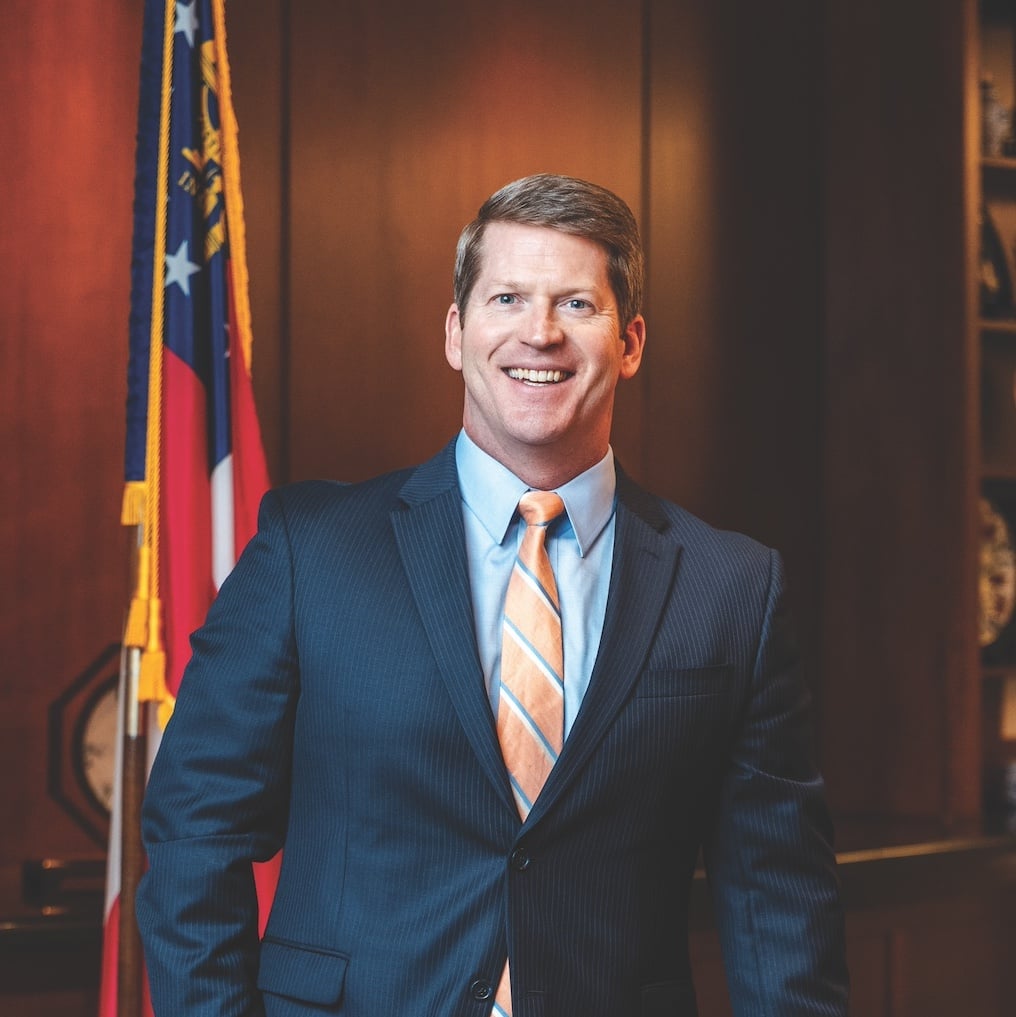
Bringing Jobs and Investment: Matt Reed, Albany Area Chamber of Commerce interim CEO, outside the St. Nicholas Hotel. Photo credit: David Parks
Downtown Albany is rewriting its story.
Renovations are underway at the building that housed the former Belk department store on West Broad Avenue – the future home of the Albany Museum of Art when it opens in the spring of 2028. Nearby, a new boutique hotel, bar and restaurant welcome guests to their renovated space. And just a few blocks away, renovations continue at the Davis Exchange Building to bring 56 apartments to downtown, including 41 income-restricted units.
“Anything we can do to facilitate revitalization of our downtown, I think we are doing and have done and are continuing to do,” says Mayor Bo Dorough, who adds that includes seeking designs for a downtown central common.
Across the city and county, conversations continue about workforce shortages, industrial recruitment and housing needs. Together, it’s a scene of reinvestment and the hard work of long-term economic growth.
“I’m positive that Albany’s best days are ahead,” says Chamber of Commerce interim CEO Matt Reed.
While defense, higher education and industry support Albany’s urban economy, agriculture remains an important part of Dougherty County’s regional economy, supporting agribusiness, food processing and logistics throughout Southwest Georgia. Healthcare is also a dominant economic force, led by the Phoebe Putney Health System. At the same time, local leaders continue efforts to expand workforce training, attract new industry and strengthen the area’s role as a regional hub.
Challenges remain familiar: Workforce availability, housing and economic pressures on farmers continue to shape conversations among business and civic leaders. But local officials say collaboration between education, industry and government has helped position Albany for steady growth.
“We’re doing the right things to bring jobs and investment and to grow our population,” Reed says. “I think like most rural communities that don’t sit on an interstate, that can be tougher.”
Ready To Do Business
That movement is perhaps most visible in the community’s aggressive push to expand its industrial footprint.

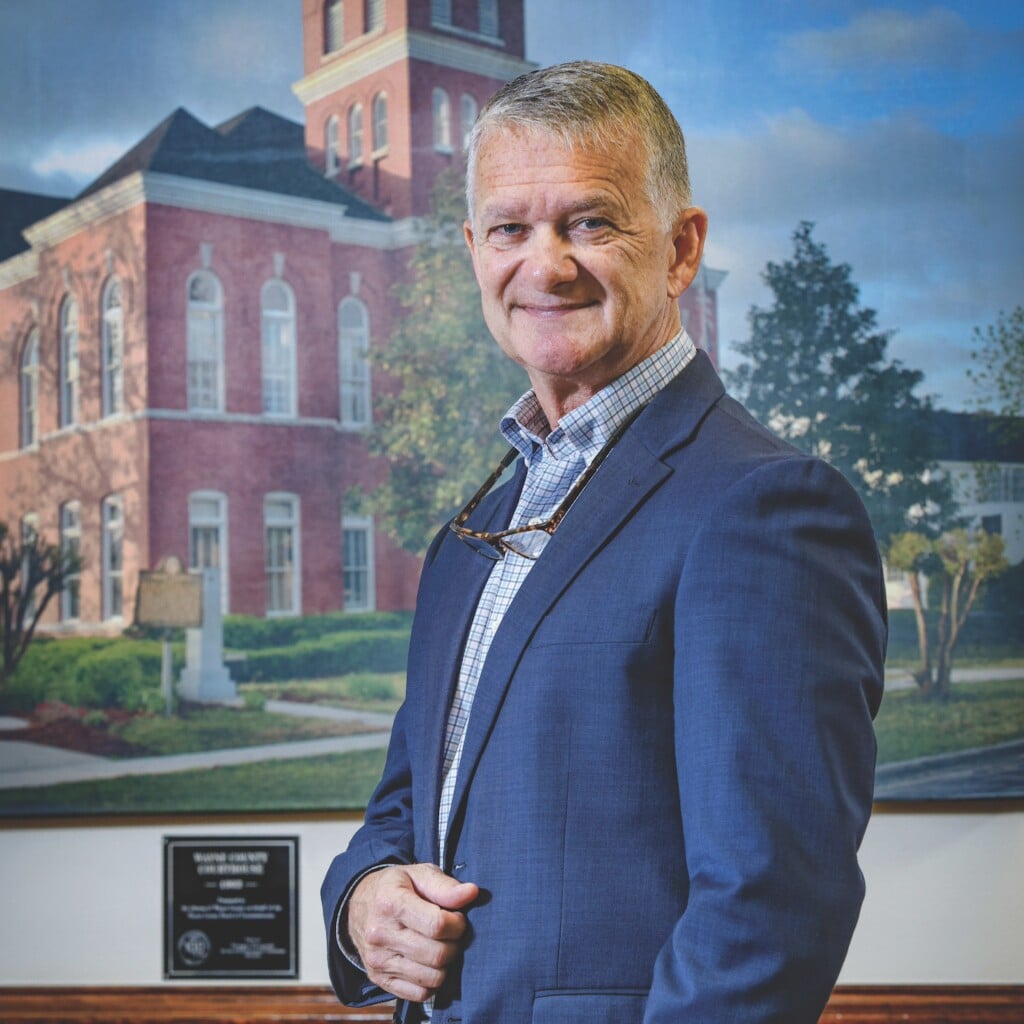
Big Projects: Albany-Dougherty Economic Development Commission President and CEO Jana Dyke, at the construction site of a business resource center downtown. Photo credit: David Parks
By assembling more than 1,000 acres of contiguous, marketable industrial property – including a major expansion around the Pecan Grove corridor near the airport – Albany-Dougherty leaders say the community is now positioned to compete for industrial projects that previously would have bypassed Southwest Georgia.
“For the first time in a long time, our community has the ability to say we can do larger projects that we were not able to do,” says Albany-Dougherty Economic Development Commission President and CEO Jana Dyke.
The effort reflects a changing economic-development landscape where manufacturers and distributors increasingly seek larger footprints for logistics operations, automation and future expansion.
“Things are bigger than they were when I first started in this business over 25 years ago,” Dyke says. “Your prospects need larger space for cross-stocking, they need larger space for parking semis, they need larger space for just the overall footprint of their floor plan so that they can implement the AI systems that they need.”

Coming in 2028: Rendering of the Albany Museum of Art. Photo credit: Contributed
Target industries remain agriculture, manufacturing and distribution, but the expanded acreage also opens the door to future Department of Defense-related projects tied to the Marine Corps Logistics Base Albany, one of the region’s most significant economic drivers with an estimated annual impact of about $1.3 billion and approximately 8,000 civilian and military personnel.
Building a Workforce
Dougherty County’s poverty rate continues to significantly exceed both state and national averages, a challenge local leaders say underscores the importance of workforce development and long-term investment. That’s one reason programs to support workforce and entrepreneurship are expanding.

Job Training Classes: Albany Technical College has expanded its program in commercial truck driving. Photo credit: Contributed
In April, the Georgia Department of Agriculture announced the launch in Albany of a Georgia Grown Resource Center in partnership with the Albany-Dougherty Economic Development Commission. It will be the second of nine planned resource centers from Georgia Grown in the state and will serve as a hub for agribusiness support, technical assistance and entrepreneurial development across Southwest Georgia to strengthen the region’s agricultural economy.
The economic development commission plans a shared facility downtown to house the resource center, the Launch Room startup accelerator and FLEX ABY, a youth entrepreneurship initiative for Dougherty County high school students.
“If we can teach one child, and they can [eventually] buy their first house, and that’s the first person in their family who’s been able to do that, that is what we come to work for every day,” Dyke says.
The focus on workforce pipelines is also shaping decisions across Albany’s educational and economic institutions.
“I think the hardest thing for us is the educational piece,” Dyke says. “Companies don’t realize that there is a Georgia outside of Atlanta.”

Educating Veterans: Albany Technical College is preparing to open a VECTR Center, designed to help veterans and military families with job training, above. Emmett Griswold is Albany Tech’s president, below. Photo credits: Contributed

Albany Technical College President Emmett Griswold says enrollment has begun rebounding after pandemic-era declines, with the college posting a 3% increase from fall 2024 to fall 2025 and a 4% increase from spring 2025 to this spring.
“We’re getting our legs back under us about how to continue to provide students for the employers that are in need in this area,” Griswold says.
He says the college has expanded programs in nursing, commercial truck driving and teacher preparation while also launching a new electric and hybrid vehicle training program in January designed to anticipate future workforce needs.
“The electric vehicle industry is booming,” Griswold says. “We want to try to stay with the trend of what the industry is needing.”
Albany Tech officials work closely with regional employers, including Georgia Power, Procter & Gamble, Molson Coors and Mars to continually update curriculum and equipment. Griswold says the school follows a three- to five-year refresh program to update labs and equipment but refresh them earlier if warranted.
“Our whole focus and purpose is to provide employees for employers in the workforce,” Griswold says.
The college is also preparing to open the first phase of a planned VECTR Center, a state-supported veterans’ education and workforce transition initiative designed to help veterans and military families connect with training and employment opportunities.
Growing the Region
Leaders at Albany State University also believe higher education will play an increasingly central role in the region’s economic future.

Increasing Enrollment: Albany State University President Robert Scott. Photo credit: David Parks
Robert Scott became Albany State University’s president in May 2025, returning to higher education after nearly two decades in the private sector, including executive leadership roles with Kraft Heinz, Abbott Nutrition and The Coca-Cola Company. Since arriving, he has completed a 100-Day Listening, Learning and Leading initiative with faculty, staff, students and community stakeholders.
Albany State now enrolls more than 6,800 students, has recorded four consecutive years of enrollment growth and generated an estimated $282 million annual economic impact in fiscal year 2024, supporting more than 2,600 jobs.
“We’re one of the few schools that enjoy increased enrollment year on year,” Scott says. “That is a great thing.”
But Scott believes Albany State’s greatest opportunity extends beyond the campus itself.
“The biggest asset that’s not being used fully, in my opinion, is the relationship that the university can and should have with the broader 14 counties that surround Albany State,” he says. “The greatest asset that we have to unlock is how Albany State University sits within the community of Albany and the broader community of Southwest Georgia.”
Scott says the university’s role as a regional institution goes beyond enrollment and workforce production.
“We have an oversized impact in … what we create in terms of the workforce, what we create in terms of the revenue we help generate, but that is a bit transactional,” he says. “What I want us to have is an impactful relationship with the broad-based community across the region.”

Unique Role: Troy Beetz is Albany State University’s inaugural vice president and chief university growth officer. Photo credit: Contributed
At the center of that strategy is growth. The university recently appointed former business executive Troy Beetz as its inaugural vice president and chief university growth officer – a role Scott says is unique within Georgia’s university system and intended to align enrollment, branding, partnerships and community impact under a single strategy.
“Growing a university cannot happen in individual silos across a university,” Scott says. “We’re going to have a holistic growth strategy where we’re going to look at not just enrollment growth, but brand recognition [and] community impact.”
The effort includes a strong focus on recruiting students from the 14 surrounding counties.
“I want to recruit and compete for the best students in these 14 counties,” Scott says. “They want to be here. I don’t want them to have to travel outside the 14 counties to have a great education.”
Scott believes Albany and the surrounding counties already possess many of the ingredients that businesses seek when evaluating expansion opportunities. Drawing from his corporate background, where he helped make manufacturing location decisions, Scott says companies consistently evaluated four areas: incentives, workforce, schools and public safety.
“Albany [and] the counties that surround Albany … check all four,” he says.
He points to collaboration between Albany State, Albany Technical College and area school systems as a regional advantage.
“There is no separation between the three of us and how we are looking to solve the challenge of workforce readiness through education,” Scott says.
Scott says the university’s future not only affects the city but the region around it.
“If you grow Albany State University, you will grow Albany the city,” he says. “It is inseparable. If you grow the city of Albany, you’ll grow the region. And if you grow the region, you’ll grow Georgia.”
The Economic Driver
Few institutions shape Albany’s economy more directly than the Phoebe Putney Health System.
With nearly 6,000 employees, Phoebe remains one of the largest employers in Southwest Georgia with an economic impact of more than $2.5 billion. But President and CEO Scott Steiner says the organization’s long-term challenge is not patient demand – it’s workforce capacity.
“We’ve got the volume here; I just don’t have the workforce,” Steiner says.

Critical Care: Phoebe Putney Memorial Hospital, above, is expanding its medical residency program through a partnership with Morehouse School of Medicine, says Phoebe Putney Health System President and CEO Scott Steiner, below. Photo credits: Contributed

Phoebe’s year-and-a-half-old partnership with Morehouse School of Medicine aims to reshape healthcare training in the region through expanded residency programs and the development of a regional medical campus in Albany.
“We’re going to go from our current 24 family-medicine residents to more than 140 when this program is mature,” Steiner says. “You’re going to see 100-plus people that need apartments, that are going to be joining churches and shopping and going to restaurants.”
The two-year-old Living & Learning Community, developed in partnership with Albany Technical College and located on its main campus, combines classrooms, training space and student housing designed to strengthen healthcare pipelines in Southwest Georgia.
Steiner says the region’s healthcare future depends on collaboration beyond the hospital system itself.
“It’s going to take our entire community to recruit and retain our physicians,” he says. “That’s what I love about being here – our community is always up for the challenge.”
Steiner says Phoebe is facing mounting financial pressure tied to federal healthcare policy and reimbursement uncertainty. Approximately 68% of Phoebe patients are covered through Medicare or Medicaid, while another 10% are uninsured.
“If the government is in a state of chaos, and they’re your biggest customer, that’s going to permeate through the system,” Steiner says.
Even so, Steiner remains optimistic about the region’s long-term potential.
“There is so much opportunity, but we’ve got to go grab it,” he says. “It’s going to take some grind. It’s going to take some grit.”
Destination Albany
Tourism is increasingly part of Albany’s long-term development strategy.
“I’ve been very encouraged by the movement that’s going on here in Albany,” says Visit Albany President and CEO Kasey Summerville, who arrived last fall from Little Rock, Arkansas. “When I say movement, it’s the reinvestment that the city is making in the various projects.”
Summerville points to Albany’s designation on Georgia’s Civil Rights Trail, growing entertainment offerings and expanding regional partnerships as opportunities to strengthen tourism across Southwest Georgia.
“We have a market for individuals who are looking for a destination that does not have the heavy traffic, that does not have expensive hotel costs, that’s easy to navigate,” Summerville says.

Mixed-Use Project: The redevelopment at the Albany Mall’s former Sears site, depicted in this rendering, includes a dual-brand Hilton hotel property alongside tennis and pickleball courts. Photo credit: 229 Life
Redevelopment at the Albany Mall’s former Sears site – including a dual-brand Hilton hotel project – reflects continued investment in the city’s northwest commercial corridor as developers reposition aging retail properties for mixed-use growth. Next to the hotel will be a sports and entertainment complex, featuring tennis and pickleball courts and a community gathering space. The public-private venture involving the city of Albany and Dougherty County will receive approximately $2.9 million in SPLOST funding. Construction is expected to be completed by next summer.
Summerville also believes expanded convention and meeting space could play a major role in downtown redevelopment. A recently completed feasibility study recommending a modern conference center expansion has intensified local discussions about the future of the Albany Civic Center and convention tourism opportunities.
“I am excited about that and excited that people are listening and recognizing the need,” Summerville says.
Stronger Together
Throughout Albany-Dougherty County, leaders repeatedly return to the same themes: collaboration, workforce development and long-term investment.
County Commission Chair Lorenzo Heard says one of the county’s greatest challenges – and opportunities – is housing.

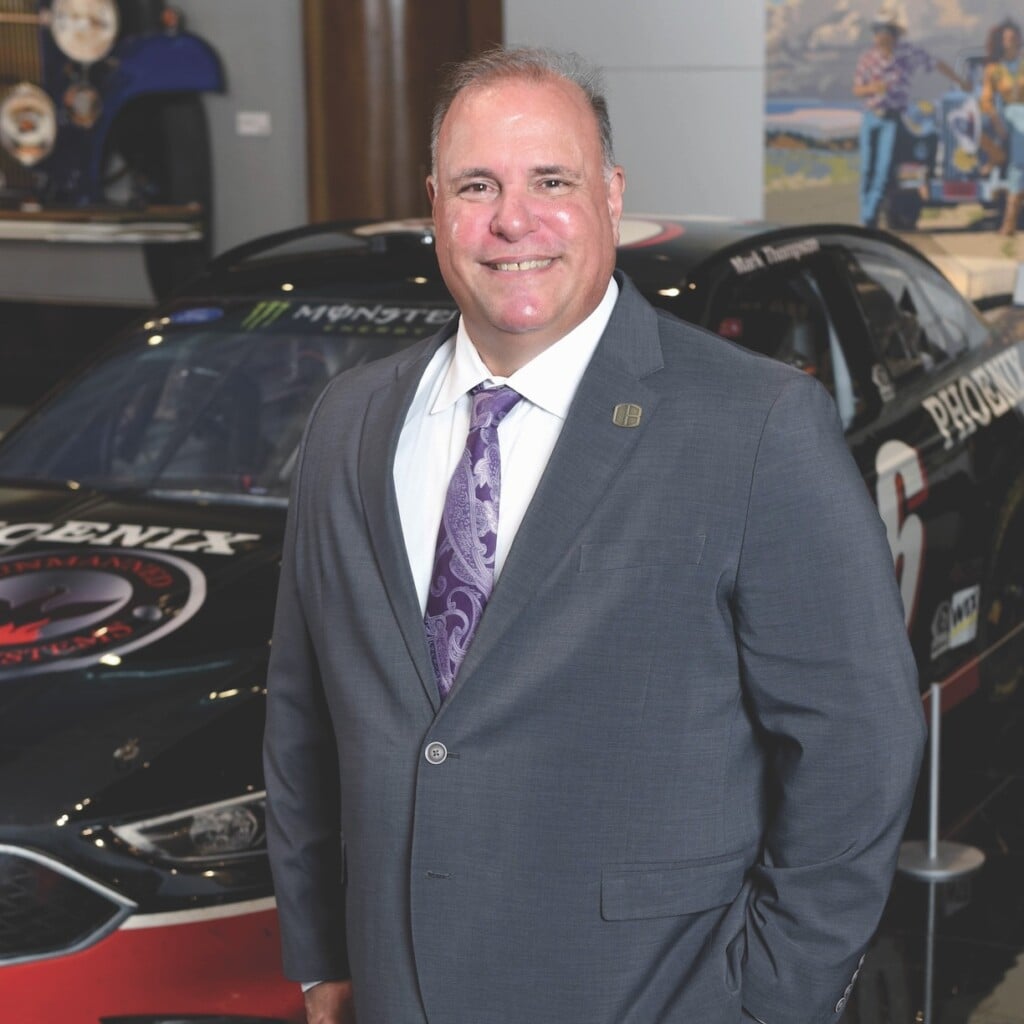
Challenges and Opportunities: Dougherty County Commission Chair Lorenzo Heard. Photo credit: David Parks
“One of our focuses, because we know if we want to stabilize families, if you want to grow the tax digest, is housing, housing, housing,” Heard says.
Heard says decades of limited middle-income housing development contributed to economic stagnation and population loss.
“I think that we can help people begin creating generational wealth by putting them in affordable housing and affordable home ownership,” he says.
Affordable housing could soon be more attainable, thanks to the city of Albany enlisting the help of the Center for Economic Development Research, which is part of Georgia Tech’s Enterprise Innovation Institute. The center’s researchers conducted resident surveys and focus groups to determine housing needs. From there, they devised a plan that led to a $1.1 million federal grant to build up to 30 homes in an area near Phoebe Putney Memorial Hospital currently filled with vacant lots, abandoned homes and subpar rentals.
To supplement the federal grant, the city of Albany will provide $2 million to pay for land, roads and infrastructure. The new units will range from apartments and quadruplexes to single-family homes. Some will be rentals and others owner-occupied. The public-private redevelopment effort is backed by several entities including the city, the hospital, redevelopment agencies and Albany Land Bank. The project is Albany’s first major single-family home redevelopment in decades.
In addition to adding housing, Albany is upgrading gyms, parks and recreation centers around the city. Construction broke ground earlier this year on the Putney Park Community Center in South Albany.
“It’s a demonstration of our commitment to Albany’s youth, and it’s very important,” says Mayor Dorough.
Local leaders say they will continue pursuing additional state and federal investments, including a phase-two VECTR facility that Heard believes could significantly impact the local economy.
“I am absolutely committed to getting Albany-Dougherty to grow,” Heard says.
Better Days Ahead
For interim chamber president Reed, the community’s greatest strength may be its growing sense of shared purpose.
“I feel like we’re all rowing in the boat together a little better,” he says.
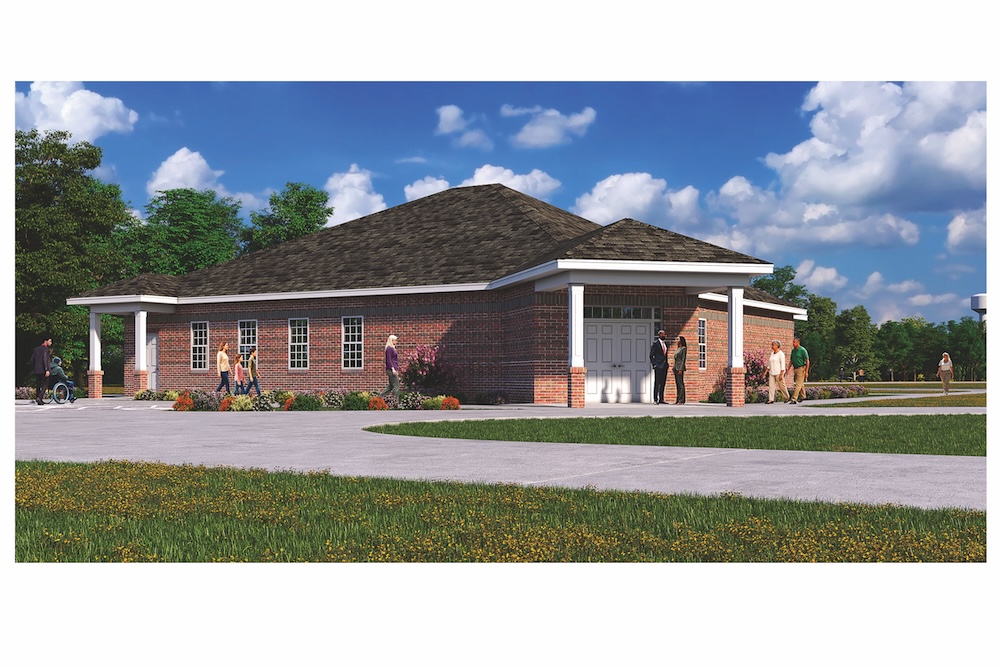
Gathering Place: Rendering of the Putney Park Community Center, which is expected to be complete by the end of the year. Photo credit: Contributed
Albany’s future remains a work in progress. The challenges facing Dougherty County – poverty, workforce shortages and population decline among them – did not emerge overnight, and local leaders acknowledge they will not disappear quickly.
Still, with downtown redevelopment projects, workforce initiatives, industrial recruitment efforts and healthcare expansion, many see a community increasingly willing to invest in its future.
“You feel the movement,” Summerville says.
And Heard believes that momentum is only beginning.
“I think that as we keep putting these pieces together,” he says, “we’re going to ultimately get not just to where we once were, but even beyond that.”
Local Flavor
Albany’s Exciting Moment

Restored Property: Matt Fuller, co-owner of the renovated St. Nicholas Hotel. Photo credit: David Parks
For years, the historic building at the corners of North Washington Street and Flint Avenue in downtown Albany sat vacant, its future uncertain. But now it’s fully restored and home to the St. Nicholas Hotel, Harry’s Bar and the 1906 Restaurant, bringing life and a gathering place to the city. The historic building’s charms include original tin ceiling panels and tile flooring, brick walls and a wood-paneled library with a fireplace.
The hotel’s adjoining restaurant derives its name from the year construction first began on the building. Harry’s Bar takes its name from the big-band leader Harry James, who was born in the hotel. The restored property features 26 rooms, starting at $169 a night.
While business travelers make up much of the hotel’s clientele, co-owner Matt Fuller says they’re also seeing strong interest from locals seeking a downtown “staycation” experience. “There is definitely a demand in the community,” says Fuller, who was born and raised in the Albany area. The hotel and restaurant were fully booked for both Easter Sunday and Mother’s Day shortly after opening in March.
For Fuller, the project was about more than restoring a historic building. It was also an investment in downtown Albany’s future.
“I wanted to serve [Albany] that way,” Fuller says of his time on the city commission from 2018 to 2022. “And then I felt that from the development side, there were probably other ways that I could be more impactful and do things that were more beneficial to the city.”
The renovation uncovered architectural details long hidden beneath decades of alterations and damage from a devastating tornado in 1940. The biggest challenge came while drilling the hotel’s elevator shaft, a process complicated by layers of limestone and flint rock beneath the building that added months of delays and significant expense.
Still, Fuller says the team remained committed to seeing the project through.
“We’ve hit little snags and things along the way, but everyone involved has stayed positive,” he says. “We’re real happy with how things have turned out and the opportunities that are in front of us right now.”
Local tourism officials and civic leaders view the St. Nicholas as another important piece of Albany’s ongoing downtown revitalization efforts.
“It’s a great asset to have downtown and to have in Albany,” says Visit Albany President and CEO Kasey Summerville. “The building is beautiful.”
County Commission Chairman Lorenzo Heard calls the project “a beautiful piece of what ultimately would be a wonderful puzzle of restoring downtown Albany. It’s an exciting moment downtown,” Heard says. “An excellent shot in our arm.”