Jesup: Wayne County | Built on Timber
Workforce, Manufacturing, Community

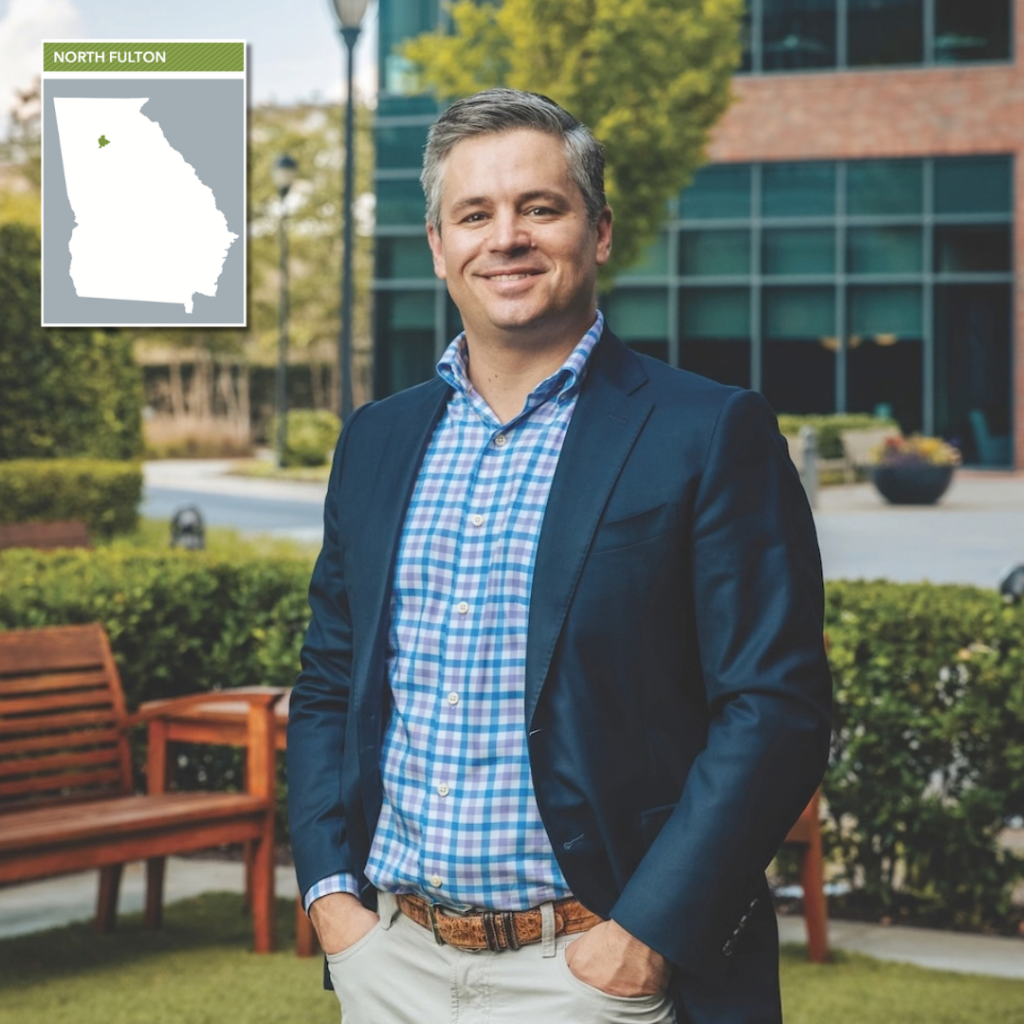
Competitive Advantage: County Administrator Paul Drawdy. Photo credit: Frank Fortune
Wayne County has never relied on a single announcement or marquee project to define its future. Instead, the Southeast Georgia community continues to build on the assets that have shaped its economy for generations: abundant timber, a skilled manufacturing workforce, strategic transportation connections and a collaborative approach to economic development.
Those strengths are helping the county write its next chapter. Workforce partners are preparing students for high-tech careers, and a new industrial site is positioning Wayne County to compete in a rapidly changing economy.
County Administrator Paul Drawdy believes that history gives Wayne County a competitive advantage many communities cannot duplicate. “Wayne County offers something rare,” he says. “We already understand industry. We have industry here. We have the supporting infrastructure for it. We have the workforce for it.”
Drawdy’s point reflects more than geography. Decades of forestry and manufacturing have created an industrial culture where businesses, educators and local government work together to support growth. That experience has become one of Wayne County’s greatest assets as manufacturers seek communities with a proven workforce and reliable infrastructure.
A Strong Foundation

Strong Network: Dell Keith, executive director of the Wayne County Industrial Development Authority, at the new industrial park. Photo credit: Frank Fortune
For Shaun O’Quinn, chair of the Wayne County Industrial Development Authority, the county’s greatest strength begins with its people. “I love this place,” he says. “The reason I came back is because I wanted to make it a better place than it was when I came through here.”’
After building his business in Wayne County, O’Quinn chose to stay because of the community he has known his entire life. “It’s small enough that you know a lot of people, but just big enough that there is always somebody new,” he says.
That sense of community carries into the county’s approach to economic development. O’Quinn describes Wayne County as a place where businesses, local government, schools and civic organizations work toward common goals, whether supporting an existing employer or preparing the next generation of workers.
Geography also works in Wayne County’s favor. Jesup sits at the intersection of two Class I railroads – Norfolk Southern and CSX – and two four-lane highways, U.S. 341 and U.S. 84. Interstate 95 lies around 35 miles away, which leads to the Port of Savannah to the north and the Port of Brunswick to the south, connecting manufacturers to domestic and international markets.

Prime Location: Jesup sits at the intersection of two Class I railroads, CSX, above, and Norfolk Southern. Photo credit: Contributed
Dell Keith, executive director of the Wayne County Industrial Development Authority, views that transportation network as one of the community’s greatest strengths. “Within eight hours, you can deliver goods to Miami or up into Tennessee or over into Mississippi,” he says. “We think we’re pretty well situated.”
Forestry continues to shape much of Wayne County’s 642 square miles, making it one of Georgia’s leading timber-producing counties. Those forests support manufacturers, landowners, logging operations, trucking companies and small businesses throughout the region.
Wayne County’s combination of natural resources, transportation access and manufacturing experience has positioned it to compete for new investment while supporting the industries that have anchored the local economy for decades. Rather than chasing every new trend, the county is focusing on strengthening the assets that have consistently driven its success.
Manufacturing Drives Momentum
The county’s manufacturing sector continues to evolve alongside changing global markets. Existing employers are investing in new technologies and developing products that create greater value from one of the county’s most abundant natural resources – timber.

Performance and Consistency: Clay Bethea, general manager and vice president of U.S. wood procurement at RYAM’s Jesup plant, left, holds blueprints with Brett Shoemaker, principal at Millspring Consulting. Photo credit: Contributed
RYAM (Rayonier Advanced Materials), Wayne County’s largest employer, illustrates that transformation. The company converts hardwood and softwood into specialty cellulose used in various consumer products.
“We take South Georgia hardwood and softwood and use technology to turn that renewable resource into high-value products,” says Clay Bethea, general manager and vice president of U.S. wood procurement at the Jesup plant. “Those products support end markets such as LCD screens, pharmaceuticals, food applications and other specialty uses where performance and consistency matter.”
Many consumers don’t recognize the RYAM name, yet they use products containing their specialty cellulose every day. To Bethea, that reflects a larger transformation taking place across Georgia’s forest products industry.
“This is not an old industry standing still,” he says. “We are taking a renewable resource that grows right here in Georgia and finding new markets, new products and new ways to support the region. The biggest opportunity is that Georgia has the forest resource, the workforce and the infrastructure to lead in higher-value uses of wood. We have an abundance of trees and fiber in this state. The question is how we create more value from that resource.”
This year, RYAM is also celebrating its 100th anniversary, marking a century of manufacturing and research that continues to evolve with modern technologies and markets.
Bethea sees the future in expanding further into specialty cellulose, green electricity, bio-based materials and emerging products such as prebiotics. Those innovations create new markets for Georgia timber. “The opportunity is to move beyond commodity thinking and create higher-value markets that support landowners, support manufacturing jobs and keep rural communities strong.”

Century of Manufacturing: RYAM, Wayne County’s largest employer. Photo credit: Frank Fortune
Technology also plays a growing role inside the plant. Automation, digital tools and AI-supported analytics help monitor equipment, improve reliability and identify maintenance issues before they become failures. “I do not look at technology as replacing people,” Bethea says. “I look at it as giving good people better information.”
One of the company’s most significant projects involves a proposed biomass (wood) boiler that would expand the types of wood material used in production. Altamaha Green Energy hopes to have the biomass boiler operating at the RYAM facility by 2029. The new venture would provide up to 70 megawatts of energy to Georgia Power’s grid and replace an old boiler.
“The old boilers, you couldn’t use anything but tree chips,” O’Quinn explains. “The new boilers don’t work that way.”
He says the technology will allow RYAM to use additional parts of each harvested tree, creating greater efficiency while opening new markets for Georgia’s timber resources.
Biomass electricity has its critics, who say it costs more than other proven renewable energy and produces toxic air pollution. They say the burning of wood adds carbon dioxide to the air, a known greenhouse gas that contributes to global warming.
Drawdy believes the investment demonstrates RYAM’s long-term commitment to the community. “That’s important to us because it’ll help cement that paper mill here in Jesup,” he says.
The same spirit of reinvestment extends throughout Wayne County’s industrial base. Keith points to expansions in the past decade by Domtar Corporation’s Engineered Absorbent Materials (EAM), Healthy Pet and Sierra as evidence that manufacturers continue to see long-term value in operating there. Great Southern Wood, producer of YellaWood pressure-treated lumber products, is also one of the top manufacturing employers in the county.
The Next Opportunity
Wayne County is also preparing for its next chapter of industrial recruitment.

New Projects Welcome: The 312-acre Wayne Commerce Center is certified as a Georgia Ready for Accelerated Development (GRAD) industrial park. Photo credit: Contributed
Last October, the Industrial Development Authority announced that the 312-acre Wayne Commerce Center was certified as a Georgia Ready for Accelerated Development (GRAD) industrial park. With roads, utilities and infrastructure in place, the site allows Wayne County to compete for projects that previously passed the community by.
“We’re excited,” Keith says. “We’re excited about what we’ve got going on and what the future holds for us.”
He says before this, available industrial property had been one of the county’s few competitive disadvantages. Interest from manufacturers increased dramatically following the March 2025 opening of Hyundai Motor Group’s Metaplant in nearby Bryan County, but Wayne County lacked a site ready for immediate development. The GRAD-certified park changes that equation.
“We’re getting a bunch of opportunities,” Keith says. “We really understand that remaining competitive requires us to be prepared. We’ve invested in the new industrial site looking forward to the future.”
Growing Talent at Home
Recruiting industry is only part of Wayne County’s economic development strategy. Equally important is preparing residents for the careers those employers create.
Through local government, the Chamber of Commerce, the Wayne County School System and Coastal Pines Technical College area industries have partnered to introduce students to careers available close to home.
At Coastal Pines, eligible high school students – usually juniors and seniors – can receive 30 hours of college credits through dual enrollment funding.

High-Demand Job: Student nurses at Coastal Pines Technical College train on mannequins. Photo credit: CPTC Staff Photographer
“With the dual enrollment that Wayne County High School is doing now with the technical college, we’ve got kids literally graduating high school with all different types of certifications, even up to associate degrees,” he says.
Coastal Pines also offers registered apprenticeship opportunities to qualified students – who are hired as full-time employees and attend classes part-time. The program works directly with manufacturers to ensure students develop skills that match industry needs.
Meanwhile WayneWorks, a regional workforce development initiative, provides an employment pipeline to businesses. The plan evolved after the Wayne County Industrial Development Authority partnered with the University of Georgia’s Carl Vinson Institute of Government to establish a process for students and adult jobseekers to find work locally. The strategy includes an annual career expo, an outreach program that highlights opportunities in different industries and a campaign to raise awareness about jobs within the county.
Keith believes such programs are especially important because many students choose careers other than a traditional four-year college path. “It’s important for us to try to create some new opportunities locally for these folks and these kids to find employment,” he says.

Employment Pipeline: WayneWorks hosts a free “This Girl Can” workshop for 6th to 12th grade girls in the county, teaching skills like welding, left. Leadership Wayne is a cohort of aspiring leaders who participate in events like agriculture day, visiting local farms, right. Photo credits: Contributed
RYAM’s Bethea says one of manufacturing’s biggest challenges is changing outdated perceptions of industrial careers. “It is not just manual labor,” he says. “It is problem solving, technology, safety, teamwork and continuous learning.”
Modern manufacturing facilities rely on operators, electricians, mechanics, instrumentation technicians, engineers, laboratory professionals and information technology specialists. Automation, digital tools and predictive analytics have transformed the workplace, requiring employees who can solve problems, analyze information and adapt to changing technology.
“A young person in Wayne County does not have to leave the area to find technical, challenging, well-paying work,” Bethea says. “They can build a career right here in Southeast Georgia.”
Preparing students for careers close to home has become a central part of Wayne County’s economic development strategy. County leaders believe connecting education with industry will help existing employers continue to grow while giving future manufacturers confidence that a skilled workforce will be ready when they arrive.
Community Investment
Economic development in Wayne County extends beyond recruiting new employers. County leaders say investments in public facilities, recreation and quality of life are equally important to retaining residents and attracting future investment.

Close-Knit Community: Shaun O’Quinn, chair of the Wayne County Industrial Development Authority. Photo credit: Frank Fortune
Through the current SPLOST program, the county is planning to construct a courthouse annex that will add a new Superior Court courtroom and expanded office space for the clerk of court. Several funding sources, including more than $1 million in grants, will help pay for the project.
Other new or upcoming projects include a senior community center and an equestrian center – being built in phases – designed to host rodeos, agricultural events, concerts and community festivals.
Drawdy says those investments demonstrate the county’s commitment to its residents while preparing for thoughtful growth. “We’re not looking to be a Chatham County or even a Glynn County,” he says. “We are Wayne County. It’s a rural county and folks love our way of life here.”
That philosophy guides county leaders as they plan for the future. In 2019, county commissioners, the county planning department and steering committee unveiled its Wayne Onward comprehensive plan update. It includes a land-use goal designed to accommodate growth while protecting the forests, farmland and neighborhoods that define Wayne County.
“We could outgrow ourselves,” Drawdy says. “One of the things the current set of commissioners wants to do is implement a land-use plan so we can control that growth. It’s at more of a pace that we would expect in a small, rural county.”
Recreational amenities also contribute to the county’s appeal. More than 60 miles of frontage along the Altamaha River offer opportunities for boating, fishing and paddling. Local parks and athletic facilities support youth sports, including football, basketball, baseball, cheerleading, soccer and more.

Recreational Amenity: The Ben Park Complex hosts baseball and softball games and tournaments. Photo credit: Contributed
The county’s two other cities are Screven and Odum. Screven was established as a railroad town and is known for hunting and fishing along Lake Lindsay Grace. Odum, which began as a sawmill community, is a close-knit town rooted in enterprise. “It’s known as the little town with a big heart,” says Mayor Gregory Leggett. “We preserve our past and look toward the future and have great potential for growth.”
Georgia’s Golden Isles, Savannah and Jacksonville, Florida are close enough for day trips.
Keith says the combination of recreation, location and community continues to attract new residents. “A lot of folks that visit Jesup and Wayne County end up coming back to live here,” he says. “They like the lifestyle.”
For O’Quinn, the county’s greatest asset has always been its people. “We’re a very close-knit community,” he says. “When there’s a need, people are always willing to help their neighbors.”
Positioned for Tomorrow
Wayne County’s strategy for the future is rooted in steady, deliberate progress. County leaders are strengthening the industries that have sustained the local economy while preparing for the next generation of manufacturing investment – positioning the county to compete in Georgia’s evolving economy without sacrificing the rural character residents value.

Enjoying the Water: More than 60 miles of frontage along the Altamaha River in Wayne County offer opportunities for boating, fishing and paddling. Photo credit: Contributed
Bethea says the area’s forest industry already possesses the resources needed to compete globally. “We have good people. We have the raw material. We have the logistics,” he says. “But modernization is expensive, and it is necessary if we want to keep these assets competitive.”
One trend Bethea is watching closely is the ability of rural communities to attract professional talent. “Jesup offers a good life and a strong community,” he says. “The challenge is making sure people understand that they can also have a serious, technical, world-class career here.”

Preserving Its Character: The Jesup Drive-in opened in 1948. Photo credit: Frank Fortune
Drawdy measures success by more than economic statistics. He says Wayne County’s greatest achievement will be creating opportunities that allow future generations to build careers and raise families without leaving the community they call home.
By expanding opportunities for business, investing in its workforce and preserving the character that defines the community, the county is positioning itself for long-term success. Built on timber and strengthened by decades of manufacturing expertise, Wayne County is proving that its greatest competitive advantage is not simply what it produces, but the people, partnerships and preparation that continue to shape its future.
Local Flavor
Global Hub, Local Roots

International Impact: Miki Thomaston, director of technical marketing and quality at RYAM, at the Marketing and Research Center. Photo credit: Frank Fortune
A research facility tucked beside a manufacturing plant in Jesup looks like a typical industrial building, but inside, scientists are developing products used in everything from cellophane to medical hygiene. For 30 years, the Marketing and Research Center at RYAM has helped position Jesup as a global hub for innovation in specialty cellulose.
“We work with customers all over the world from Jesup,” says Miki Thomaston, director of technical marketing and quality. “What we do here is definitely global.”
She says the laboratory can recreate the company’s manufacturing process on a pilot scale, allowing researchers to design and test new pulp grades before they’re produced commercially. Researchers also support manufacturers of tire cord, sponge products, sausage casings and other materials that rely on high-purity cellulose.
About five years ago, the research team and the Georgia Center of Innovation partnered with scientists at the University of Georgia to develop sustainable poultry feed from operational byproducts, as an alternative to antibiotic feed additives. Researchers helped develop a prebiotic ingredient derived from the manufacturing process that promotes healthier poultry.
Another product uses cellulose fibers from pine trees to create absorbent hygiene products for baby care, feminine care and adult incontinence.
While the science is sophisticated, Thomaston says one of the center’s greatest strengths is its people. She says the hallways are filled with scientists and specialists from around the world collaborating with employees who grew up just down the road. The diversity reflects the company’s global customer base, but Thomaston is equally proud of the opportunities the center creates for residents.
“I can’t emphasize enough how it’s a place for local talent to stay local,” she says. “Just because someone talks with a South Georgia accent doesn’t mean they can’t make an impact for a global company.”
She points to colleagues who grew up in neighboring counties and now manage scientific teams or travel internationally to support customers across Europe and Asia.
Behind the scientists is another team that keeps the operation running smoothly. Inventory, operations and planning specialists coordinate production schedules, manage inventory and ensure products reach customers on time.
For many Georgians, Jesup is known for its forestry heritage. Inside this unassuming research center, that heritage is being transformed into next-generation products that improve everyday life. It’s proof that world-class innovation doesn’t always begin in a major metropolitan laboratory. Sometimes it starts in rural Georgia, where hometown talent and global expertise come together under one roof.