Gwinnett County: Fueled for Growth
People, Partnership, Global Draw

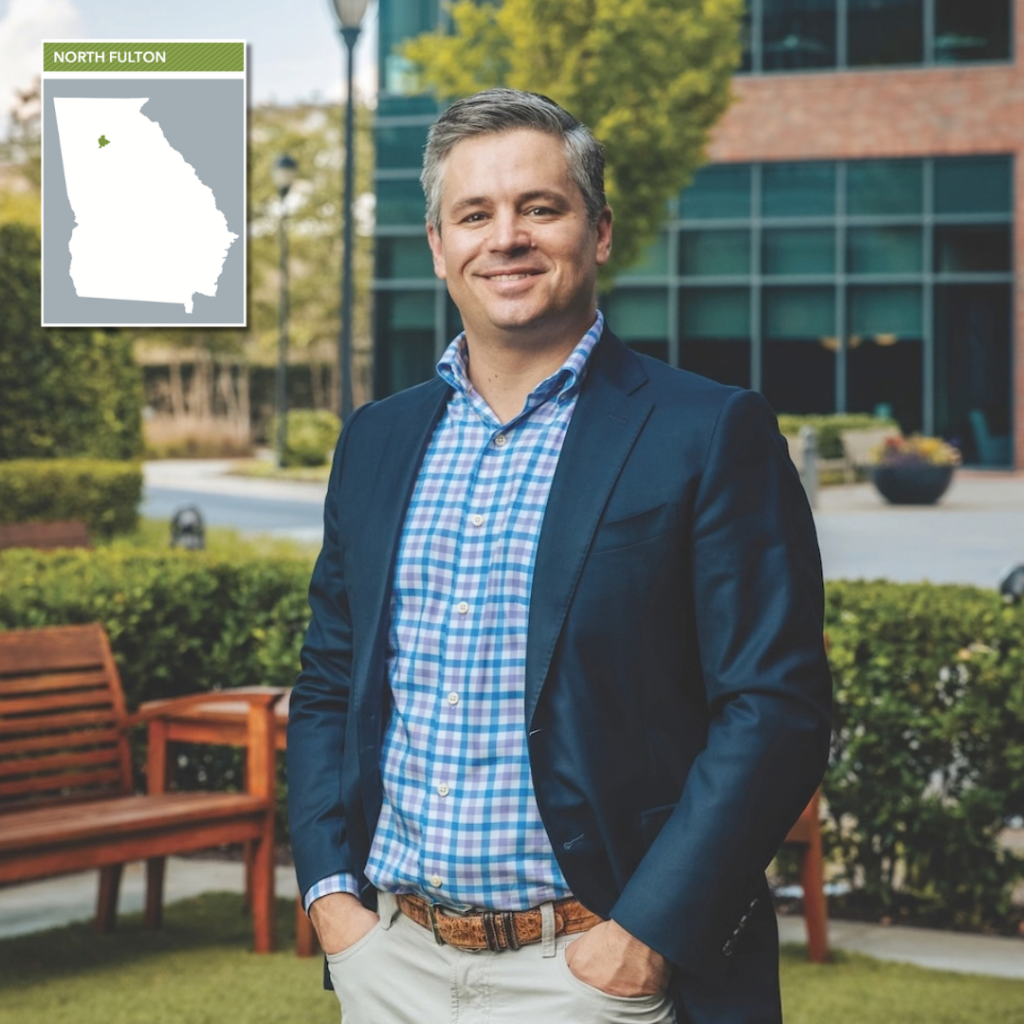
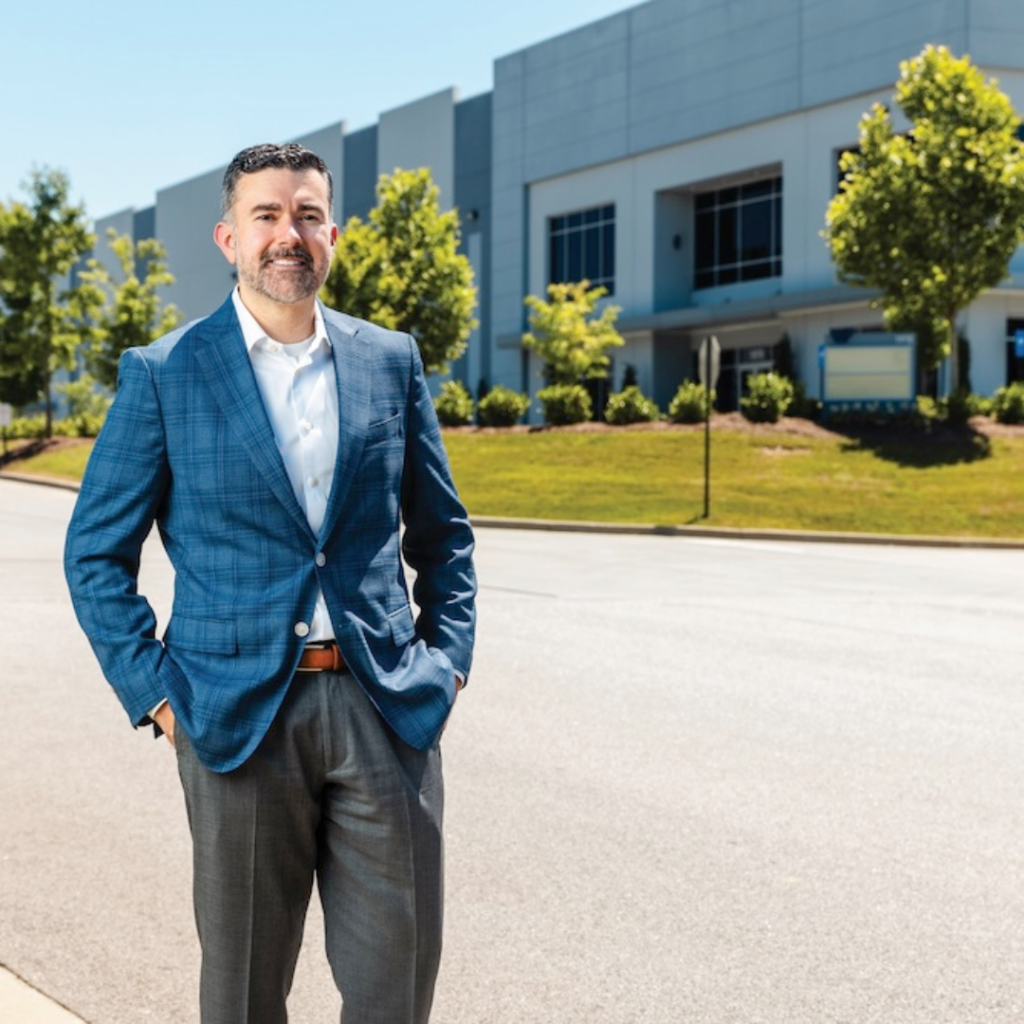
Project Development: Kevin Carmichael, senior vice president of Partnership Gwinnett and Gwinnett Chamber of Commerce Economic Development. Photo credit: Eric Sun
Gwinnett County has spent the last four decades establishing itself as a growth engine, expanding at a pace that leaves national averages far behind. U.S. Census data reveals that between 2020 and 2025, Gwinnett’s population increased by 6% and jobs surged. County leaders point to a deliberate formula of community diversity, structural livability and aggressive economic development policies to explain the boom. Gwinnett didn’t just grow fast; it grew with a clear plan across every neighborhood and city.
“We’re very proud of how these trends continue to reinforce Gwinnett’s position as one of the strongest and fastest-growing economic centers in the country,” says Kevin Carmichael, senior vice president of Partnership Gwinnett and Gwinnett Chamber of Commerce Economic Development.
Hired in May 2025 to lead regional and state-level partnerships, Carmichael steers project development across Gwinnett County. The organization seeks to recruit businesses of all sizes across five target sectors: advanced manufacturing, supply chain management, information technology, health and life sciences, and corporate and professional services.
“It’s not just that Gwinnett is growing, but that it’s growing with purpose,” says Carmichael. “There’s so much excitement around the history, the strategy and the collaboration that goes into Gwinnett County. True infrastructure, who is around the table, who is coming together – there’s so many resources here.”
The Belgian Connection
A testament to this collaboration is a March 2026 development that continues to generate major buzz: the announcement that biopharmaceutical company UCB, headquartered in Brussels, will be the anchor tenant at Rowen, Georgia’s largest knowledge community. Rowen is a transformative project – with an impact that goes far beyond Gwinnett County.
“Rowen will create new opportunities for Gwinnett residents and those across the 11-county Rowen region who are looking for a variety of job opportunities,” says Sachin Shailendra, Rowen board chair. “But more importantly, we expect to impact the U.S. and the world with the discoveries and products that will be developed on our campus over the next 50 years.
“Our first tenant, UCB, is focused on creating life-altering treatments for severe diseases, and we anticipate our future tenants to have the same level of impact,” he adds.

Rowen’s Anchor Tenant: Rendering of UCB’s 460,000-square-foot facility, which is expected to generate $5 billion in economic impact. Photo credit: Contributed
UCB estimates the total economic impact to the county at $5 billion.
“It’s a very complex, 460,000-square-foot facility worth $2 billion alone,” says Mason Ailstock, former president and CEO of the Rowen Foundation. “It’ll take three years for design, three years for construction and three years for certification.” In July, Ailstock announced he was leaving Rowen to become president of Atlanta-based nonprofit Centurion Foundation.
UCB is an ideal project to sustain Rowen’s long-term development model, a 30-plus-year full build-out, one that Ailstock says sets it apart from other innovation districts.
“Why the model works is interesting,” he says. “You want to have a sustainable business model, you want to engage in a global economy, you want to have a local impact on jobs and growth, but the funds that are generated go directly back into the mission, the vision and sustainability on site.”
UCB will sit on 79 of Rowen’s 2,000 acres and bring 330 permanent jobs to Rowen.
Diversity and Fiscal Responsibility

Strong Foundation: County Commission Chair Nicole Love Hendrickson, at Gas South Arena. Photo credit: Eric Sun
Nicole Love Hendrickson, chair of the Gwinnett County Board of Commissioners, has long touted Gwinnett County’s diversity (it’s home to more than 500 international businesses alone), and UCB is one of the most recent successes to support that. When the company’s executives toured Gwinnett County, she says, it was the area’s diversity that stood out.
“When they spent some time in the community, they recognized the global diversity and said, ‘This feels like home,’” says Hendrickson. “When we talk about diversity, sometimes it feels like cliches. But I have 5 billion reasons why diversity is an economic driver, and we’ll continue to celebrate it as one of our biggest assets here in Gwinnett County.”
Gwinnett also has an AAA bond rating, the highest rating a government can receive.
“Out of [more than] 3,000 counties across the United States, Gwinnett is one of [around] 50 that has this distinction,” says Hendrickson. “We’re really proud of that.”

Responsible Stewardship: The $170 million Gas South Arena transformation was funded by reserve cash and low-cost bonds. Photo credit: Contributed
The $170 million Gas South Arena transformation illustrates responsible stewardship. Funding the project with reserve cash and low-cost bonds allows the county to repay the loan at a lower interest rate, saving taxpayer dollars.
“That is a sign of a good, strong government with a strong fiscal foundation,” says Hendrickson.
With only 9% of land left to build on, Hendrickson identifies redevelopment as the path forward. The county has updated its Unified Development Ordinance to spur infill projects, attracting developers to revitalize declining areas like vacant retail corridors and shopping centers.
Realizing A Vision
Snellville is an example of repurposing underutilized land and a mix of older buildings and turning it into a mixed-use development. Because of this, Mayor Barbara Bender – who’s been in office since 2019 – is seeing her dream for the city come to fruition: to have a bustling, thriving downtown core.
The Grove at Towne Center – which consists of 50,000 square feet of retail, restaurant, office and entertainment space – was first studied in 2003 but derailed by the 2008 recession. Although the idea was later discussed, Bender felt neither the leadership nor the community saw the vision, so she made it a priority upon taking office.

Dream to Reality: Developing The Grove at Towne Center, a retail, office and entertainment district, above, was a priority of Snellville Mayor Barbara Bender, below. Photo credits: Contributed (above) and Woodie Williams (below)

“We had to do something to keep our property values up to make this area attractive for new development to come in,” says Bender. “I just took that idea and ran with it.”
According to the U.S. Census Bureau, Snellville’s population grew by more than 9% since 2020. Bender sees The Grove at Town Center as the lynchpin of that growth and is looking forward to a new $11.3 million community center at T.W. Briscoe Park coming online this fall. The key is to keep adding the pieces that reinforce Snellville’s family-focused feel.
“I think we’ve built out a good mix of housing and lifestyles for any age,” she says.
Business Mix in Norcross
Economic prosperity has always been Norcross Mayor Craig L. Newton’s calling card. Although the city’s primary economic sector is technical and professional services, Newton is committed to nurturing businesses of all types and sizes. Most recently, the city has become a true haven for small and family-owned operations.

Nurturing Businesses: Craig Newton, mayor of Norcross. Photo credit: Joann Vitelli
“More than 90% of the businesses in Norcross have fewer than 20 employees,” says Newton. “They’re really a major part of our identity.”
The key to attracting and retaining those businesses, according to Newton, is to listen, solve problems and continually create new opportunities.
“At the end of the day, the businesses stay where they feel valued, where government is responsive, and that’s what we’re working to provide in Norcross,” he says.
Norcross currently has several major economic developments in the pipeline. These include dynamic mixed-use projects such as Magnolia Grove, featuring a 4,000-square-foot storefront retail component; The Station and Jefferson Plaza, an 18.65-acre redevelopment of two neighboring, underutilized office hubs; the high-profile Norcross Gateway Retail Shops; and the Buford Highway Master Plan, which aims to reenvision the automobile-centric highway into a pedestrian-friendly urban boulevard. Also prioritizing foot traffic, the South End District seamlessly blends downtown’s historic spaces into a modern, walkable layout.
Newton says these projects could add between $120 million and $175 million in new market value, and that growth would add as much as $70 million to the city’s taxable digest.

In the Pipeline: Rendering of Magnolia Grove, which will feature 220 multifamily units, 14 townhomes, structured parking and 4,000 square feet of retail. Photo credit: Contributed
“The broader economic impact could be considerably greater when you include new businesses, utility customers, jobs, construction activity, permits, business and occupational taxes, taxable business equipment and the additional spending that new residents and employees would bring to our restaurants and retailers,” says Newton.
Big Business = Big Growth
Peachtree Corners was engineered from day one to prove that rapid corporate expansion works best when guided by a clear, strategic purpose. Georgia Tech graduate Paul Duke recognized that Metro Atlanta possessed a pool of skilled tech talent but lacked the infrastructure to retain it.
Looking to North Carolina’s Research Triangle Park as a blueprint, Duke sought to bridge this gap; his efforts culminated in the creation of Technology Park Atlanta, a dedicated regional epicenter for tech-centric economic development.

Looking Ahead: Curiosity Lab, the economic development engine in the heart of Tech Park, is home to companies from Japan, Switzerland, Germany, Saudi Arabia, Ireland and Canada. Photo credit: Contributed
The most populous city in Gwinnett County, with 42,519 residents, Peachtree Corners rivals Atlanta’s economic strength, boasting the same one-to-one job-to-resident ratio. The area incorporated as a city in 2012, following a campaign spearheaded by Mike Mason, who was subsequently elected as its inaugural – and only – mayor.
Peachtree Corners has a zero millage rate, which means that city residents don’t pay any property tax beyond what is paid to the county.
“[Since] Paul Duke’s day, we have been a major regional job hub,” says Mason. “That’s the kind of thing that really supports your economic development.”
Built in the ’70s, Technology Park Atlanta was the first 500-acre high-tech office park in the state of Georgia. Mason says it’s currently facing redevelopment efforts to refit technologically obsolete buildings with fiber-optic cable. The future of the development lies in Curiosity Lab, the economic development engine in the heart of Tech Park, home to companies from Japan, Switzerland, Germany, Saudi Arabia, Ireland and Canada.
Mason says adding updated housing options, accessible greenspaces and redeveloping its downtown core will continue to attract residents.
Creating a Community
For decades, Peachtree Corners was Gwinnett County’s newest city, until the city of Mulberry was incorporated on January 1, 2025. Mulberry is the county’s second-largest city by population. Inaugural Mulberry Mayor Michael Coker drove the effort to start the city. Rather than chasing rapid expansion, Coker and his team are drafting a comprehensive plan for Mulberry that anchors the new city’s future in the principles of purposeful growth.
“The first thing is coming up with a strong plan,” says Coker. “It’s important to make sure we have a vision for what we want Mulberry to look like.”

Unique Vision: Mulberry Mayor Michael Coker, in front of the town’s city hall. Photo credit: Joann Vitelli
That vision includes preserving Mulberry’s family-focused feel, its equestrian-friendly land use and historic areas dating back to the 1800s.
“We’ve created entire zoning classifications around these equestrian developments,” says Coker. “That’s something I think is unique from other areas in Gwinnett County.”
A Focus on Livability
While Mulberry is just getting started, Duluth is undergoing something of a rebirth. Mayor Greg Whitlock has prioritized economic development since taking office in 2024.
“Our revitalization was tied to the entertainment industry, retail and dining experiences,” says Whitlock. “But the jobs that were created were not livable wage jobs.”
Housing also plays a complex role in the city’s economic dynamic. Whitlock notes that while Duluth’s housing is more affordable than in surrounding communities, that affordability sometimes creates a false perception that the area is less desirable.
To combat this, the city is actively working to shift its economic landscape. “We’re trying to raise the social economics of our community and have a neighborhood stabilization plan,” says Whitlock. This strategy involves diversifying housing options, ensuring neighborhoods are safe and pursuing industries that offer livable wages.
Helping a Region Thrive
Like Whitlock, Lawrenceville Mayor David Still is focused on housing solutions for all socioeconomic levels.

Neighborhood Stabilization: Duluth Mayor Greg Whitlock. Photo credit: Eric Sun
“We’re looking to see what communities are deficient and working to take care of them all,” he says.
And like Duluth, Lawrenceville has many attainable options.
“We have more than 30% of all affordable housing in Gwinnett County,” says Still.
One of Still’s main objectives has been to lower the city’s poverty level.
“I’m trying to make it so that our children can thrive and we can have a healthy community,” he says.
Since Still took office in 2020, Lawrenceville’s poverty rate has dropped from 17% to 15.4% today, according to the U.S. Census Bureau.
“Someone told me a long time ago that if you want to build affordable housing where there are no jobs, and there is no transportation, you’re creating poverty,” says Still.
Jobs and transportation are key to the city’s success. Driven by incoming commuters, Lawrenceville’s daytime population swells to 90,000 – triple its residential base. Additionally, Ride Gwinnett, the county’s microtransit service serving Lawrenceville, Norcross and Snellville, allows residents to use an Uber-like app to schedule on-demand rides to designated areas for a flat $3 fare.

On-Demand Transportation: Ride Gwinnett is the county’s microtransit service that serves Lawrenceville, Norcross and Snellville. Photo credit: Contributed
Breaking Housing Barriers
As the deputy director of Gwinnett County’s Planning and Development Department, Matt Elder handles affordable housing initiatives. Through his leadership of the Affordable Housing Development Fund, the county has invested more than $21 million into projects that will deliver hundreds of affordable housing units.

Evaluating Needs: Matt Elder, deputy director of Gwinnett County’s Planning and Development Department, handles affordable housing initiatives. Photo credit: Woodie Williams
Eleven countywide projects are now complete, with six more currently under construction. Crest Pointe Village, an extended-stay hotel conversion in Norcross, is expected to open this fall. Others include Rainbow Village Phase 2 in
Duluth, The Alcove at River’s Edge Phase 2 in Dacula, Redland Trace in Lawrenceville, Roosevelt Commons in Sugar Hill and Polyantha in Loganville.
“We were able to put money on the table and tell the developers that if you can meet specific requirements – set aside 40% of your units at 65% area median income – then we would be willing to invest in your project,” says Elder. “The private sector really met us at the halfway point and showed a commitment to develop affordable housing on a mixed-income basis.”
His role also includes evaluating the future needs of the county’s workforce.
“First, we rely on our homegrown talent … and work with our higher-education institutions and regional universities to keep that talent here in any way possible,” says Elder. “We’re telling companies, ‘If you want to come here and bring 500 jobs, we have oodles of people ready to fill those jobs – they’re ready today, they’re ready tomorrow, and they’ll be ready for the next few generations.’”
Education for Gwinnett’s Future
Some of that talent is from Georgia Gwinnett College, where President Jann L. Joseph focuses on matching college programs with local jobs to help Georgia’s workforce grow.

Creating Pathways: Georgia Gwinnett College President Jann L. Joseph. Photo credit: Contributed
“GGC remains committed to creating pathways into growing professions while addressing critical workforce needs,” says Joseph. “This fall, we will launch a new concentration in artificial intelligence, helping students understand and apply technologies that are transforming nearly every industry,” she says.
And GGC is proving that advancing innovation works best when anchored by a firm commitment to foundational needs. Joseph recently secured approval to launch the institution’s first-ever graduate degree: a Master of Arts in Teaching in Secondary Education.
“As Georgia works to address teacher shortages, this program will help prepare future educators while creating new opportunities for career advancement,” she says.
Workforce preparation begins on day one for Georgia Gwinnett College’s nearly 13,000 students, driven by a Quality Enhancement Plan that expands experiential learning across all disciplines.
“We know students learn best when they can apply knowledge in meaningful ways,” says Joseph. “We want them to leave with experiences, skills and
confidence that allow them to contribute immediately to the workplace and continue growing throughout their careers.”
The Numbers Don’t Lie

Great Place to Live: Gwinnett Chamber and Partnership Gwinnett President and CEO Nick Masino. Photo credit: Eric Sun
Gwinnett is home to 17 municipalities – many with thriving downtown cores – and the No. 1 academic high school in Georgia (the Gwinnett School of Mathematics, Science and Technology). Gwinnett Chamber and Partnership Gwinnett President and CEO Nick Masino doesn’t see the county’s growth slowing down anytime soon.
“We’re incredibly competitive,” says Masino. “We’re leading the country in job growth. We’re a leader in population growth. This is a great place to live – the jobs, investment, high quality of life. I’m very happy with where we are.”
Gwinnett County maintains its high quality of life through its joint city-county SPLOST and education-focused E-SPLOST programs, according to Masino. SPLOST allows the County to pay for major projects with a funding source other than property tax revenue, and E-SPLOST is a one-cent sales tax on all retail purchases in Gwinnett County that goes to support education.
“These are the largest two SPLOSTs in the state’s history,” says Masino. “There is no county or city system that has collected more than Gwinnett has.”
These tax programs allow Gwinnett to continually modernize its infrastructure and update school technology.
“We just keep renewing and improving,” says Masino. “I think that’s the reason why we lead in so many categories.”
Local Flavor
A Sweet Escape

Recreational Transformation: Sugar Hill Mayor Brandon Hembree, at Gold Mine Park. Photo credit: Woodie Williams
Parks, recreation and greenspace dominate many of the conversations among Gwinnett County leaders. This focus on the great outdoors is particularly evident in Sugar Hill, where Amy Parris Cook – a resident since 2012 and a recent board appointee to Sugar Hill’s Downtown Development Authority – has witnessed the region’s recreational transformation firsthand.
Initially drawn to the area by its proximity to Lake Lanier, she has watched the city’s green space rapidly expand since Brandon Hembree began serving as mayor in 2022. That expansion includes Sugar Hill Riverlands, a new recreational destination beginning its first phase later this year, in cooperation with the National Park Service.
In all, the project consists of approximately 85 acres of land north of state Route 20 (Cumming Highway) and 70 acres south of Route 20, adjacent to the Chattahoochee River National Recreation Area.
“Riverlands South is going to [include] a mile-and-a-half soft hiking trail,” Cook says. “You’ll feel like you’re in the North Georgia mountains – it’s near [Route] 20, but you can’t hear the cars. It’s definitely going to be a hidden gem.”
The Riverlands Master Plan reserves about 90% of the property for recreation and green space, and the rest can be used to develop retail, restaurants, hotels or offices. In June, Sugar Hill officials reported that work had begun on a new Orr’s Ferry Trail. Riverlands South’s plans also include an inclusive nature-themed playground across from the pedestrian bridge, alongside a potential nature center and botanical garden.
“The Chattahoochee River National Recreation Area is on our west border, and for a long time, I wanted to partner with the National Park Service to raise awareness of our area and to do some programming,” says Mayor Hembree. “I’m excited about it.”
According to a National Park Service spokesperson, the city of Sugar Hill is an important gateway community to the Chattahoochee River National Recreation Area and the regional Chattahoochee RiverLands trail network. The entities have worked together on projects to restore streambanks, educate elementary school students and provide recreational opportunities.
“Eventually, we’re going to have a 16-mile greenway going around Sugar Hill,” says Cook. “And it will connect to many of our parks – and a couple of parks that are yet to be constructed.”
So far, Hembree’s tenure as mayor has been defined by opening 6 miles of the Sugar Hill Greenway and launching two new parks, Ridge Lake Park in 2022 and Gold Mine Park, in 2023.