Ups, Downs and In-betweens
News on Tybee, Spelman & Morehouse, Ossoff & Warnock, and more
Sand Dollars: Winter may be coming, but Tybee Island beaches will be a busy place. That’s because the federal funds needed to replace about 1.3 million cubic yards of sand on its 5-mile beach were finally approved, allowing work to go forward. The entire beach nourishment project will cost $20 million, with the city of Tybee Island responsible for $8 million and the Army Corps of Engineers providing $12 million.
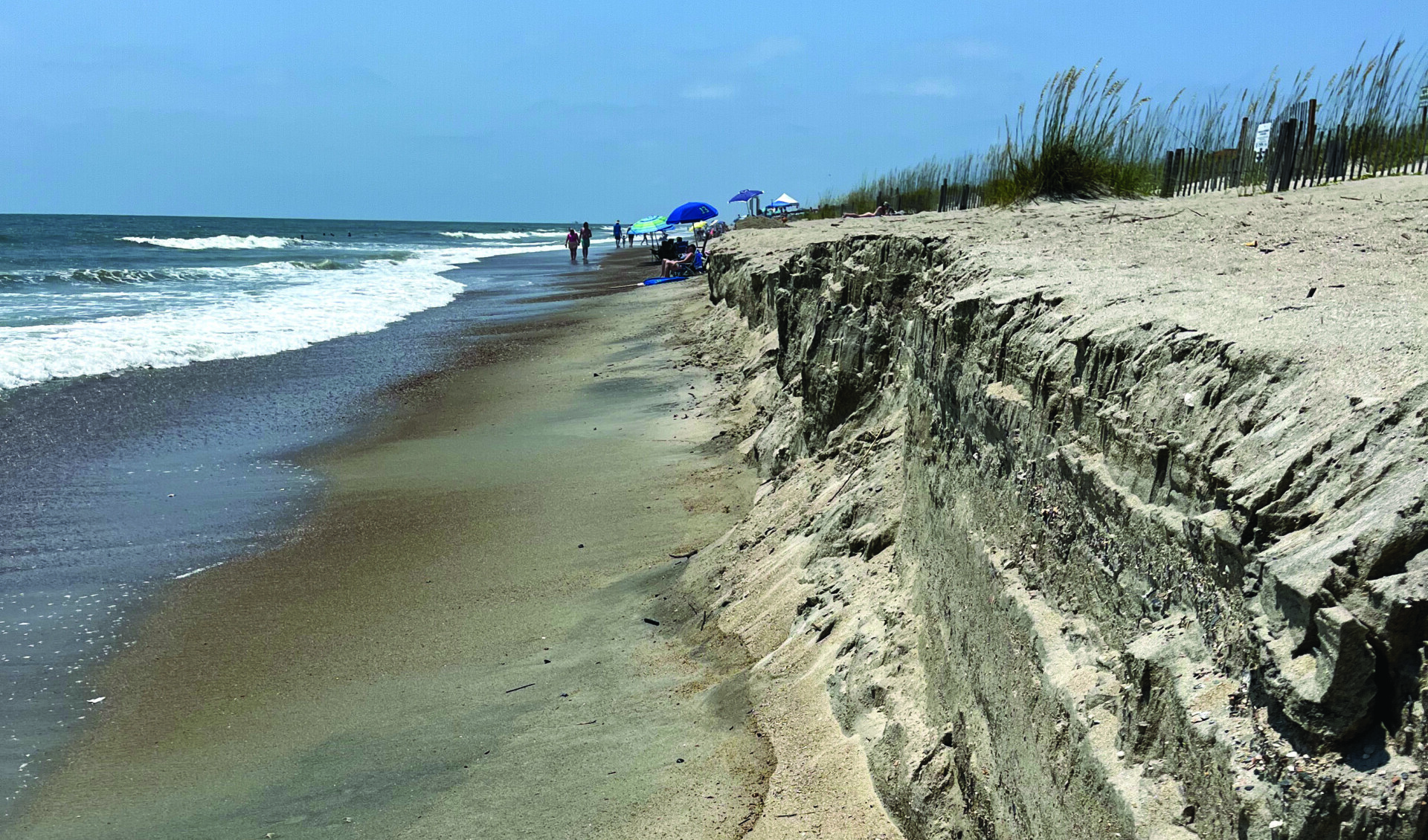
Erosion at Tybee Island. Photo credit: Contributed
Timing for the badly needed project was in question after the Corps’ initial work plan from earlier this year did not include the funding. After the earlier plan was announced, the city and state mounted a full-scale press for funding. Among those advocating for Tybee were U. S. Reps. Buddy Carter (R-1) and Mike Collins (R-10), Democratic U.S. Sens. Jon Ossoff and Raphael Warnock, as well as city, state and Chatham County leaders.
“This has truly been a team effort,” Mayor Brian West said in a statement. “Tybee is grateful to everyone who stayed at the table, kept making the calls, kept asking the questions and kept fighting for this project. We are ready to get to work.” The project should kick off in December.
20 Years on Top: From its founding in the basement of an Atlanta church in 1881, making it one of the oldest private historically Black liberal arts colleges for women, to its status as the top producer of Black women who complete doctoral degrees in STEM fields, Spelman College is no stranger to making history. And in one case, the school just keeps topping itself – it’s No. 1 in U.S. News & World Report’s 2027 Best HBCUs rankings for the 20th consecutive year. That’s also how long U.S. News has been ranking HBCUs, meaning Spelman has always been atop the list.
Spelman also ranked No. 2 on the list of Top Performers in Social Mobility and No. 34 among the top 40 Best National Liberal Arts institutions in the country.
Its next-door neighbor, Morehouse College, routinely resides on the top 5 HBCU list, this year at No. 4 – meaning “SpelHouse” often accounts for 40% of the top HBCUs in the country.
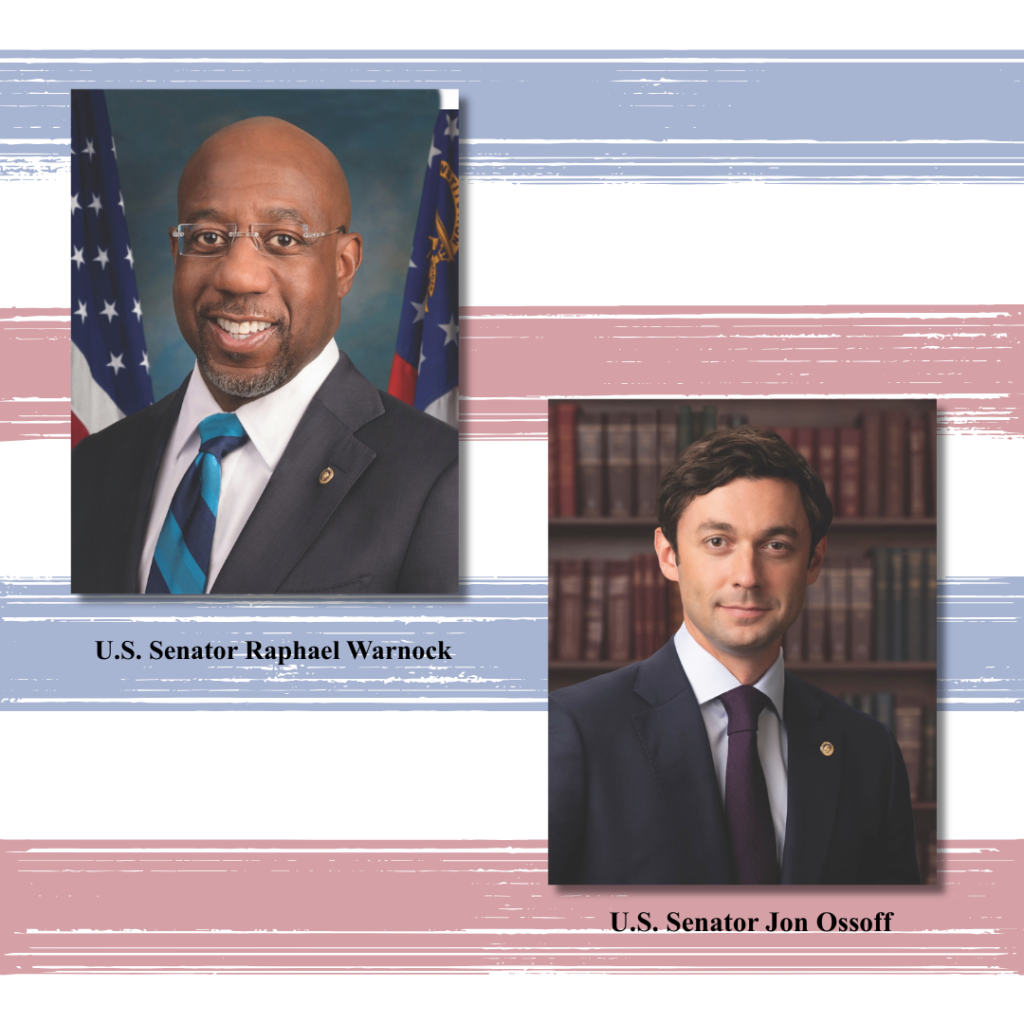
Campaign Stops: While Ossoff is often mentioned as a 2028 POTUS candidate, is it Warnock who is testing the waters for a presidential run? He crisscrossed the country in October, campaigning for Democrats in New Hampshire, Nevada, South Carolina, Mississippi, North Carolina, Michigan, Wisconsin and Ohio – many of the states that play an early and prominent role in selecting a Democratic presidential nominee.

Raphael Warnock. Photo credit: Contributed
When asked about a possible run during an interview at the Texas Tribune Festival in September, Warnock first replied with a joke about running for HOA president and then answered, “We’ll see what happens.” AJC political reporter Greg Bluestein noted on X, “That’s probably the furthest he’s gone yet hinting at a 2028 bid.”
Good Stats, Bad Stats: First the good: the state Department of Education announced that the public high school on-time graduation rate rose in the last school year to 88.5%. That’s up a point from 87.2% in 2025 and continues a 15-year climb interrupted only in 2021 when the COVID-19 pandemic caused disruptions to schools. Progress has not been even, however. While 147 city and county districts had a graduation rate at or above 90%, 33 fell below that mark.
Now for the bad: new data from the Georgetown Center on Poverty and Inequality show that Georgians are struggling with economic issues and the cost of living. The center’s Family Economic Well-Being Index measures economic burden across housing, food, childcare and healthcare. For Georgia, the numbers were harsh: 36% are burdened or severely burdened by the cost of food, and 47% face burdens affording healthcare – both higher than the national averages. One place where Georgia did better than the national average was the burden of childcare costs for kids under 6. But more than half of all households with young children still struggled to afford childcare. 

Jon Ossoff. Photo credit: Contributed
Sports Divided: It’s rare that Georgia’s two Democratic senators vote on opposite sides, but the Protect College Sports Act had them lining up across from each other, with Ossoff voting yes and Warnock voting no. The legislation, which passed the Senate on a bipartisan vote, covers NIL (name, image and likeness) rules, limits the number of times a student athlete can transfer without sitting out, and changes rules around hiring coaches from one school by another in mid season.
Ossoff told The Atlanta Journal-Constitution that he voted for the bill because it included healthcare for athletes and provided support for non-revenue and women’s sports but said he remained open to changes to the bill, which now goes to the House.
Warnock was among 22 senators voting against the act, including all four Black Democrats, saying he wanted to see more protection for student athletes. It’s unclear when the House might take up the bill.