Catching up… with Dr. Michelle “Shelley” Nuss
Founding Dean, University of Georgia School of Medicine
Dr. Michelle “Shelley” Nuss, Founding Dean of the University of Georgia School of Medicine, is a professor of Medical Education in Internal Medicine and Psychiatry. She has spent much of her career focusing on ways to address shortages in healthcare education and workforce pipelines.

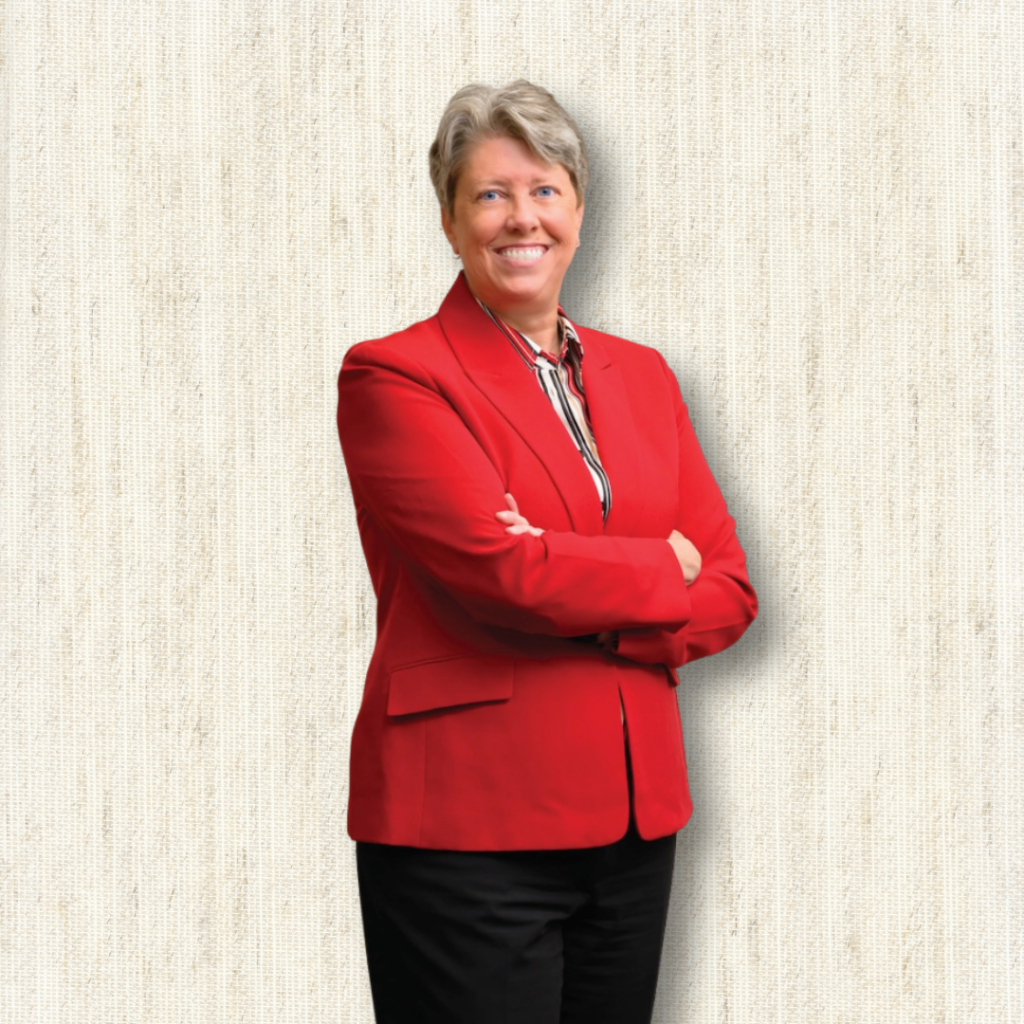
Shelley Nuss, Founding Dean, University of Georgia School of Medicine. Photo credit: Daemon Baizan
What was the response when you opened up medical school applications?
 Overwhelming. Within a few hours, we probably had 700 to 800 applications. By the end of two weeks, we were well over 2,000 applications from all over the state, out of state. The applicant pool was strong. Everyone wants to be part of the class because it’s the first. It will go down in history.
 How was your design of the new medical school shaped by your experiences?
 I was at West Virginia University [for medical school], which is also a flagship university. I learned early on in my career [that] you’ve got to understand the state of West Virginia, its Appalachian culture. It’s very rural. What WVU did very well was [offer] a fourth-year elective where we had to work in rural West Virginia and understand that community.
The other important thing I learned is that there were a lot of medical students for a very small population. Statistically, West Virginia has more public medical students per capita than anywhere else in the U.S. The third thing is that you likely stay where you do your residency. I was an example of that. [After] I went to WVU for medical school, [I] did an internal medicine and psychiatry program right there in West Virginia. Twenty years later, I was still there practicing.
We are taking those three key factors forward, in concept, to this new UGA School of Medicine. We’re looking for students who are aligned with our mission. To understand Georgia, coming from other locations, you have to expose students to what is going on in various counties across the state. One of the first things we’re doing during orientation is a Georgia road trip to understand the health challenges occurring in various communities. You can’t learn how to treat Georgia unless you know Georgia.
What research or clinical strengths do you envision becoming the school’s signature areas?
Our big research focus will be those top healthcare challenges the state is facing: cancer and metabolic challenges, respiratory illnesses, rates of obesity, heart attacks and stroke. We’ve recruited Yana Zavros. She is a Georgia Research Alliance Eminent Scholar coming to us from the University of Arizona. She’s brought more than $14 million in research grants. Her focus is on pancreatic cancer and other gastrointestinal-related cancers, to try to break down why the chemotherapy is not working. She’s working on very hopeful things in the pipeline that can actually get from the bench to the bedside more quickly.
We’re all about building the Multidisciplinary Translational Medicine Institute, taking research in the lab and getting it out as quickly as possible through clinical trials and into people. Otherwise, it just sits on the bench, not doing anything.
How can the med school attract students who will ultimately practice medicine in Georgia, especially in underserved areas?
It goes back to finding students aligned with our mission of serving the state and attracting students from those areas. That is the No. 1 predictor of going back to work in an area – either you’re from that region or you’ve been exposed to it. One metric Georgia does really well in is that if you do your residency program in Georgia, you’re very likely to stay here – it’s around 50%. And if you do your medical school and your residency in Georgia, which is what we hope our students would do, the number rises to 73%.
Between 2013 and 2025, we added a thousand new GME [graduate medical education] programs. There’s a heavy focus on relieving the bottleneck between the transition from med school to residency by adding additional GME programs as part of the Rural Health Transformation Program, passed in 2025. There are 75 extra [programs] that hit the ground running this July as a result of that bill. We used to be upside down, with more students than resident slots in Georgia medical schools. We’re at about even now. If every single student wanted to stay, they could.