Savannah | Chatham County: Entering a Global Era
Growth, Tourism, Ports

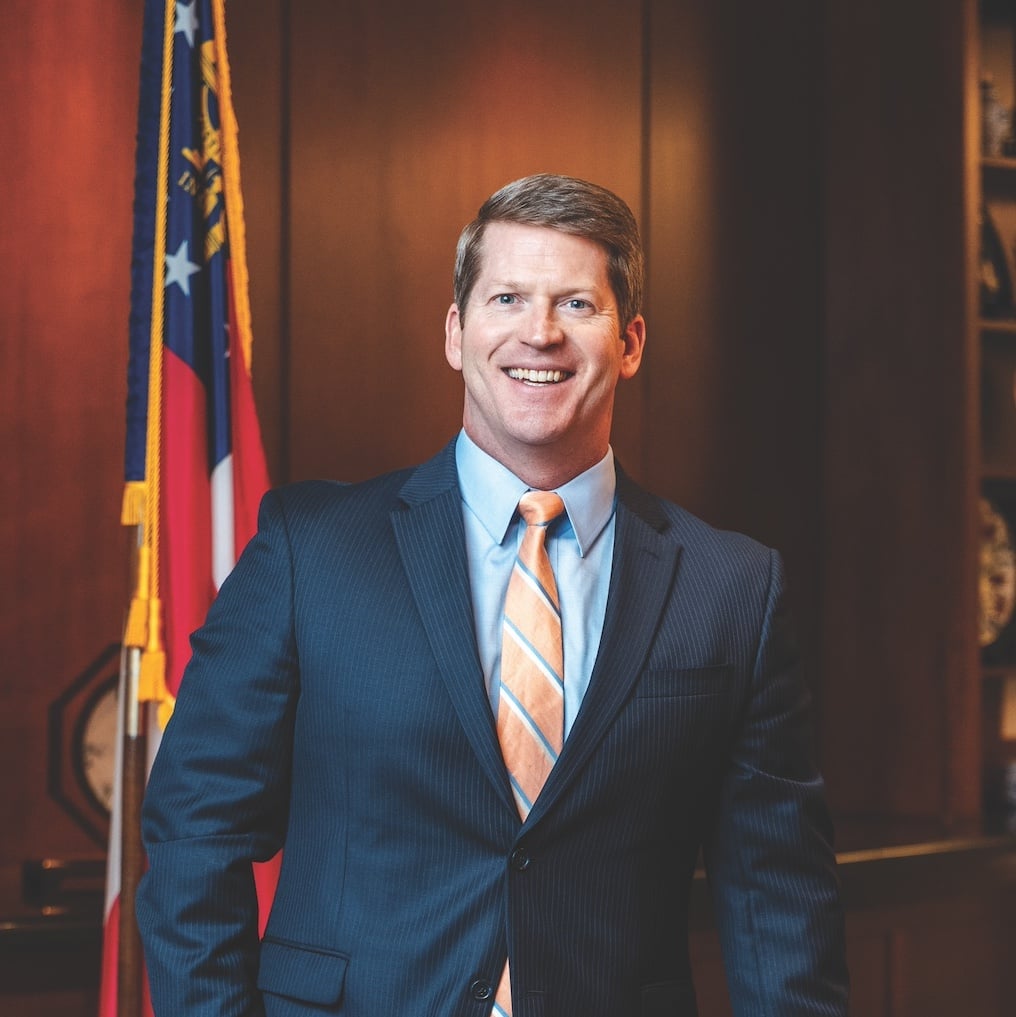
International City: Savannah Mayor Van Johnson at the new Enmarket Arena. Photo credit: Frank Fortune
Savannah is well known for its colonial charm and cinematic appeal, but major manufacturing and tourism industries, along with an increasing population, are fueling explosive growth that is propelling America’s first planned city into one that businesses worldwide are noticing.
“We are rockin’ and rollin’ here,” says Mayor Van Johnson. “Change is hard, but we have to resign ourselves that we’re not Mayberry anymore.”
Johnson says Savannah is now an international city with a diversified economy in a region that includes two of the state’s largest employers – Gulfstream Aerospace and Hyundai Motor Group.
“Gulfstream is the No. 1 employer in Savannah,” he says, “and Hyundai, which will be the state’s largest employer, is only about 20 miles outside the city. We have the third busiest port in the nation, an airport that travelers have rated the No. 1 airport in the country for the last six years. We have the military, the largest art school in the country and 16 million visitors a year.”

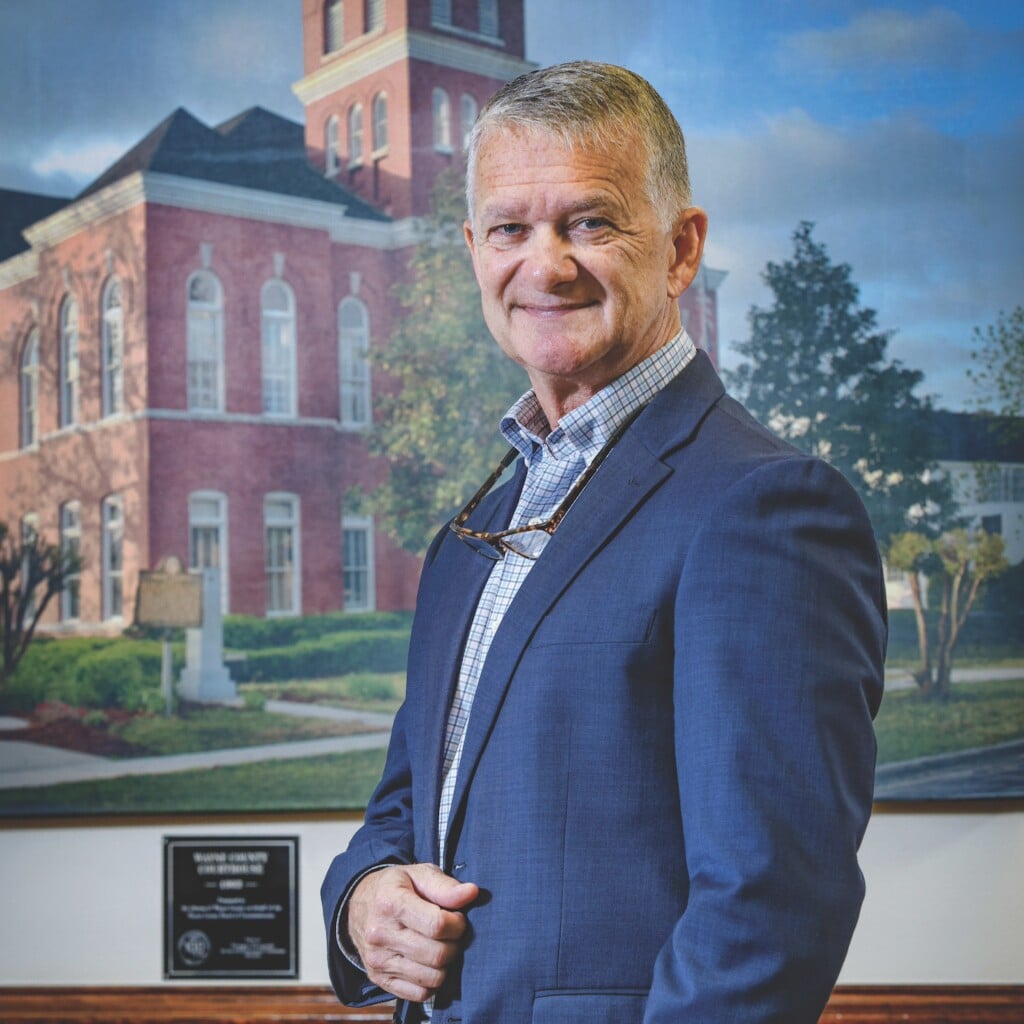
Big Changes: Joseph Marinelli, president and CEO of Visit Savannah, at the construction site of the Signia by Hilton hotel near the convention center. Photo credit: Frank Fortune
With the newly expanded Savannah Convention Center open for business for the past year, the number of visitors to the city is expected to grow. The $276 million expansion doubled the size of the facility to 660,000 square feet.
“This expansion makes our facility the second-largest convention center in the state of Georgia,” says Joseph Marinelli, president and CEO of Visit Savannah, “and nationally it moved us from the 151st largest convention center in the country to the 72nd largest convention center in the country.”
Marinelli says the expanded space gives annual convention customers – largely associations based in Georgia – the ability to grow their programs and stay in Savannah. It also allows the convention center to recruit larger, national conventions.
“In October, we did a groundbreaking on a brand new 444-room convention hotel called Signia by Hilton,” he says. “It’s expected to open by mid-year 2028. Now we have a much larger convention center, and soon we’ll have a brand-new hotel next to the convention center. We have over 130 prospective new conventions that we are talking to about coming to Savannah when the new hotel is built.”

Convention Hotel: Rendering of the 444-room Signia by Hilton, which is expected to open in 2028. Photo credit: Contributed

Bigger and Better: The Savannah Convention center’s recent expansion makes it the second-largest convention center in the state. Photo credit: Frank Fortune
SPLOST-funded Projects
The county celebrated a first in 2025 with a November beam-signing ceremony for a SPLOST-funded Early Childhood Learning Center in East Savannah, which will provide education-based childcare services to children between the ages of 6 weeks and 4 years old. The center is a public-private partnership involving Chatham County, the city of Savannah and East Savannah United, a nonprofit organization dedicated to revitalizing East Savannah.
In February, East Savannah United announced it has received a $20,000 grant from Georgia-Pacific Savannah to help support construction. Expected to open this fall, the 20,000-square-foot facility will include a health clinic and a public library and is expected to accommodate up to 144 children.

Education-Based Childcare: Rendering of the SPLOST-funded Early Childhood Learning Center in East Savannah. Photo credit: Contributed
“We realized that our children, when they get to third grade, they are 10,000 words behind [their peers],” says Chatham County Commission Chair Chester Ellis.
According to Bert Brantley, president and CEO of the Savannah Area Chamber of Commerce, the idea behind the center’s funding model is to remove the upfront capital costs and make childcare more affordable.
“We’re about 1,500 childcare spots short of what the demand is,” he says. “There are parents that are not able to work because they have to stay home because there’s not enough spaces, plus the cost; it’s very expensive. We don’t want housing, transportation or childcare to be a barrier to the workforce.”

Learning From Other Cities: Last year, the Savannah Area Chamber of Commerce brought 77 community leaders on its inaugural LEADS trip to Nashville to attend several panels and visit a childhood education center in nearby Clarksville. Photo credit: Contributed
Last year, the chamber brought 77 community leaders from throughout the region on its inaugural LEADS trip to Nashville, where participants attended panels on redevelopment, housing, transportation and hospitality. While there, they also saw a publicly funded early childhood education center in action. Officials in Clarksville, Tennessee carved out land in an industrial park and used public money to build a childcare center run by a private operator, Brantley says.
“To some extent we’re modeling these ideas after other places where they’ve been successful,” he says. “As a chamber, we feel really strongly about our role to highlight the issues and provide answers for the business community.”
The county is also leveraging SPLOST funds to build two new gyms for communities that don’t have access to indoor fitness facilities, Ellis says. The multipurpose gyms will include pickleball, basketball and volleyball courts.
“There are tournaments that go around the country, and we’re designing these buildings so we can host some of those tournaments,” Ellis says. “They will become evacuation sites when necessary.
Preparing for Weather Events
Strolling Savannah’s live-oak lined streets is a popular amusement for visitors and residents alike, but as with any coastal community, its beauty is contrasted by the perils of natural disasters like hurricanes and climate change. The city was last affected by Hurricane Helene in September of 2024, when the storm pushed west to Savannah bringing 75 mph winds.
With an eye toward increased safety in case of a natural disaster, the Chatham County Board of Commissioners held a groundbreaking ceremony in 2024 for a new emergency operations center.

Eye Toward Safety: Chatham County Commission Chair Chester Ellis, left, and Dennis T. Jones, Chatham County emergency management director, right, look at site plans for the new Emergency Operations Center that’s now under construction. Photo credit: Frank Fortune
“It’s not only me, but a lot of residents are excited about it,” says Ellis. “We have an emergency operations center now, but it’s old and has a lot of what I call ‘hiccups.’”
The 83,000-square-foot center on Gulfstream Road near the Savannah/Hilton Head International Airport is designed to withstand Category 5 hurricanes. Ellis says the $120 million facility is being paid for with a mix of SPLOST funds, and federal, state and local money.
The facility will house the Emergency Operations Center, non-emergency call center, 911 dispatch, the Chatham Emergency Management Agency, airport police and military personnel, he says. If disaster strikes, the facility will act as a centralized hub for emergency management and house up to 450 emergency employees until the danger has passed, Ellis says.
“[The facility] can house people for up to a week and a half if we are cut off, plus we can monitor all the activity that goes on around us,” he says. “The 165th [Airlift Wing] from the National Guard will be housed in there with us. The 165th are the hurricane hunters.”
Chatham County also is safeguarding its finances. Last summer the county achieved a AAA bond rating, a milestone that allows the county to pay lower interest rates on borrowed money. “That’s the top rating that a county can get,” Ellis says.
Openings, Closings and Expansions
As local leaders celebrate wins and embrace innovative solutions to combat workforce shortages, the community was dealt an enormous blow last summer when International Paper, a manufacturer of containerboard and packaging products, announced it was shuttering its Savannah plant and its Riceboro plant in nearby Liberty County. More than 1,000 people lost their jobs. They announced the closure in [August], and the last day of September was the last day of operations.

Hiring Workers: In 2025, Hyundai announced a $2.7 billion expansion at the metaplant that will create an additional 3,000 direct and indirect jobs. Photo credit: Contributed
Brantley recalls a lot of “scrambling” to help people who lost their jobs that day. The chamber held a job fair featuring 120 employers that was attended by 2,500 people.
“These were jobs that were paying somewhat above market rate,” he says. “We have a really serious workforce shortage in Savannah. There is job growth, so there were absorption opportunities, but maybe not at their pay rate or jobs they were trained for – not necessarily a one-to-one fit.”
After nearly 90 years of operating in Savannah, the closure marked the end of an era. But 2025 also marked the beginning of a new chapter when Hyundai Motor Group Metaplant America opened its $12.6 billion manufacturing facility – the company’s first plant dedicated to the mass production of electric and hybrid vehicles. By 2031, the plant will create at least 8,500 new jobs on-site and support the production of 500,000 Hyundai, Kia and Genesis vehicles annually.
Just months after the doors of the Metaplant opened and weeks after a much-derided immigration raid in September that resulted in 475 workers, mainly South Korean citizens, being detained, the company announced a $2.7 billion expansion that will create an additional 3,000 direct and indirect jobs.
Two relatively recent expansions at Gulfstream’s Savannah headquarters have also boosted the vitality of the manufacturing sector. In July of 2024, the company opened its expanded customer support service center at the airport. That was preceded by the 2023 completion of a 142,000-square-foot expansion at its precision manufacturing facility. The investments represented $150 million and created 1,600 new jobs.

Savannah’s No. 1 Employer: Gulfstream Aerospace Corp. manufactures airplanes for businesses. Photo credit: Contributed
Economic growth in both the Southern U.S. and the state of Georgia has benefited Savannah. In 2023, Bloomberg reported that, for the first time ever, six Southern states – Florida, Texas, North Carolina, South Carolina, Tennessee and Georgia – contributed more to the nation’s GDP than the Northeast’s 11 states and Washington D.C.
Georgia is the eighth-most-populous state, and a 2025 CNBC survey ranked its economy No. 9 in the nation.
“The manufacturing side here is really buzzing, which is exciting,” says Trip Tollison, president and CEO of the Savannah Economic Development Authority. “All of our sectors are really booming, and we have a lot more coming.”
Tollison says he’s also excited about the investments being made in infrastructure in the region, including a $146 million surface water treatment plant expansion in Port Wentworth that will increase drinking water capacity. State lawmakers approved funding for the expansion last year.
More than $500 million was allocated at the state level to support regional water supply initiatives, with approximately $146 million designated for water infrastructure projects in Savannah. Nearby Effingham County also received $319 million for new water infrastructure. And Bryan County received $37 million for water transmission infrastructure and a high-service booster.
Another infrastructure project is a $512 million road project that will expand Interstate 16 to six lanes from the Interstate 95 interchange to the Statesboro exit. Construction on that is expected to start in 2027.
The expansion is part of a series of Georgia Department of Transportation projects that are creating a “cargo beltway,” which will help move trucks in and out of the Port of Savannah faster and more efficiently, according to Griff Lynch, president and CEO of the Georgia Ports Authority.
“For a long time now, we’ve had a very sizable capital investment plan that we’re well into,” he says. “We’ll invest $4.5 billion over the next decade.”

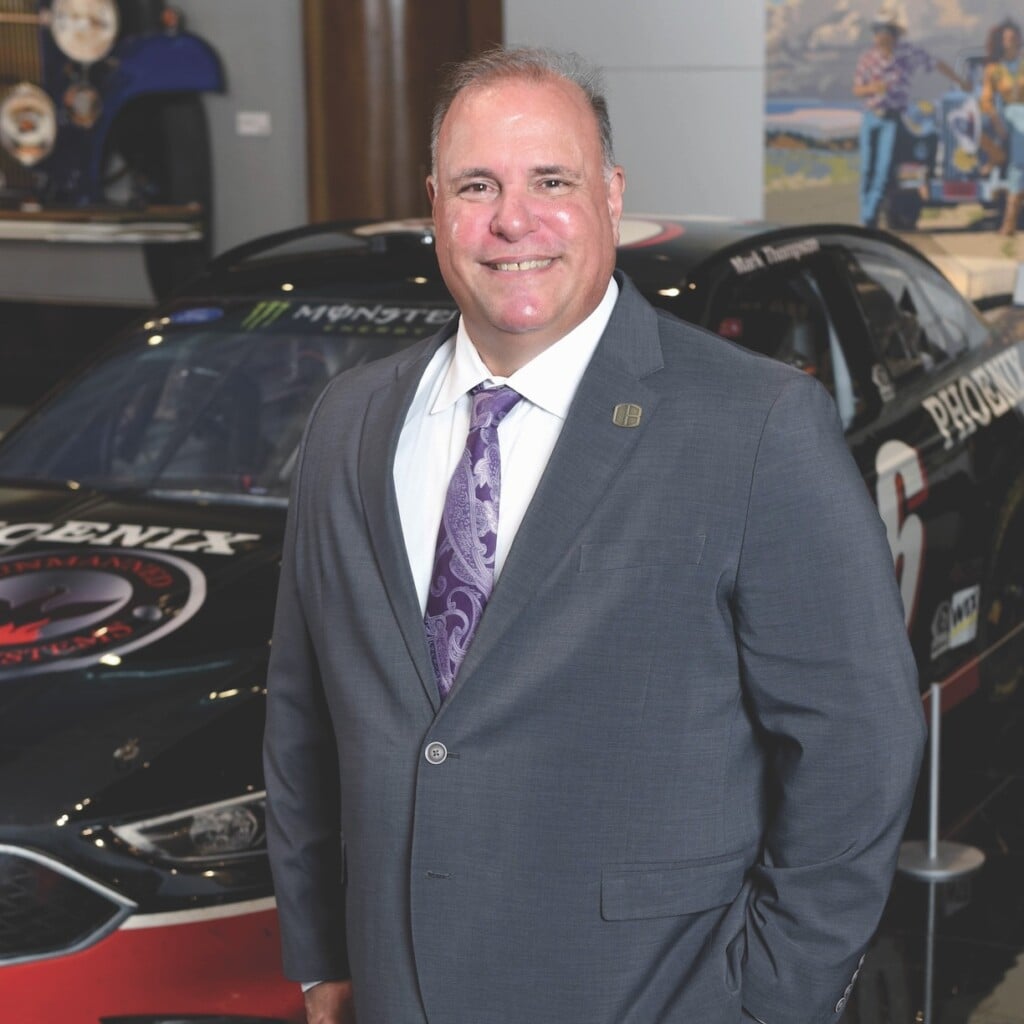
Expanding Berth Capacity: Griff Lynch, president and CEO of the Georgia Ports Authority. Photo credit: Frank Fortune
Major infrastructure expansions are underway, including five big ship berths in Savannah by 2034 and a new “roll-on/roll-off” (Ro-Ro) berth to open next year in Brunswick. A Ro-Ro berth is a specialized port terminal that allows wheeled cargo, like cars, trucks and construction machinery, to be driven directly on and off the ships.
“No other U.S. port authority is expanding berth capacity this rapidly,” Lynch says.
In order to serve two large container ships simultaneously at Savannah’s 200-acre Ocean Terminal, GPA is in the midst of a $1.54 billion berth and container yard renovation project. Renovations to the first 1,325-foot berth were completed last year, with renovations to the second 1,325-foot berth expected to be completed in June. The first phase of the container yard renovation will be completed next year, while the second phase is slated for completion in 2028.
Beginning this year, GDOT will enter the construction phase for the planned cable replacement on the Talmadge Bridge over the Savannah River. As part of the project, the cables will be shortened, raising the bridge.
“The bridge raising will increase our ability to handle even taller ships,” Lynch says. “The bridge height from the water to the bottom of the bridge is 186 feet. We’re hopeful that the project will provide another 20 feet of air clearance and that’s going to be a big deal.”
Lynch says the bridge will remain open during its raising, which is expected to be completed by early 2029.
According to an economic impact study showing statewide growth from fiscal year 2023 to fiscal year 2024, the ports provided 651,000 full- and part-time jobs statewide and generated $43 billion in personal income.
Higher Education
Also key to Savannah’s success are the three institutions of higher education that call it home: Georgia Southern University, Savannah State University and the Savannah College of Art and Design (SCAD).

Epicenter of Growth: Georgia Southern University President Kyle Marrero. Photo credit: Frank Fortune
Georgia Southern operates three campuses in the region: the main campus in Statesboro, the Armstrong Campus in Savannah and the Liberty Campus in Hinesville. This fall, the university will begin offering classes at the former East Georgia State College locations following a consolidation that was approved Jan. 1.
“We are geographically at the epicenter of growth in Georgia,” says Georgia Southern President Kyle Marrero.
That growth is not only in jobs, Marrero says, but also in the ripple effect created by those jobs, including the need for more health services, retail, dining and housing.
“All the degree programs, all the research we do must align with the needs in our region and our state,” he says. “For example, our Waters College of Health Professions, our largest college with 6,000 students, is a major producer of health professionals throughout the region.”
Increasing the regional workforce is also a priority for Savannah State University President Jermaine Whirl. Whirl took the helm at the state’s oldest public HBCU last April.
“We’re … focusing on applied research, which allows our faculty and students to solve real-world problems for our local businesses and government entities,” he says. “New research institutes in partnership with industry is a big opportunity.”
Whirl says lifelong learning and targeted continuing education programming will also benefit the region. Community partnerships with local school districts, Savannah Technical College, military installations, government and corporate organizations will ensure the university’s impact is felt across the coastal region, he adds.

Signature Event: Savannah Film Festival’s opening night. Photo credit: SCAD
Collaborating with working professionals is a hallmark of the education students receive at the Savannah College of Art and Design (SCAD).
“Events like TV Fest, the Savannah Film Festival and all of SCAD’s signature events provide our students with direct access to professionals actively working in the industry,” Kate Newell, SCAD’s executive dean of academic services, wrote in an email.
“Students meet, learn from and network with, in the case of TV Fest and Film Fest, working filmmakers, showrunners and cast, through talks, panels, workshops and live industry conversations – active networking that leads directly to career opportunities.”

Access to Professionals: The 2026 SCAD TVfest included a screening of the recently relaunched sitcom Scrubs and Q&A with its cast and executive producers, above; executives, academic leaders and students attend SCAD’s third annual AI Summit, below. Photo credit: SCAD

In 2026, 211 alumni and current students contributed to 21 films nominated for the 98th Academy Awards, including contenders in the categories of Best Picture and Best Animated Feature and every film nominated for Best Visual Effects. Some of the productions include Sinners, Avatar: Fire and Ash, Zootopia 2, and KPop Demon Hunters. The recognition highlights SCAD’s influence in the global film industry and the hands-on training preparing students for careers in film.

Active Networking: Kate Newell, SCAD’s executive dean of academic services. Photo credit: SCAD
In addition to its traditional offerings, the college now offers a new Applied Artificial Intelligence (AI) degree. In conjunction with the new program, SCAD hosts an annual AI Summit on its Savannah and Atlanta campuses, connecting students directly with major employers in the AI space who are pioneering what’s next.
“[In January] we welcomed leaders from global brands, such as Amazon, Google, Netflix, Deloitte and Coca-Cola who are actively shaping how AI is implemented across design, technology, media and culture,” Newell wrote.
In October, the college was named the No. 1 design university in the Americas and Europe by the internationally acclaimed Red Dot Design Ranking.
“SCAD was the only American university recognized as a top five institution, cementing our reputation as the world’s preeminent university for art, design and creative innovation,” he wrote. “We had 48 talented students and alumni collectively receive awards for their projects at SCAD that reflected over 15 of our degree programs.”
A place of natural beauty, a thriving business environment and the home of top-notch institutions of higher education are all notes in Savannah and Chatham County’s siren call.
Local Flavor
A Pirate’s Life on Display

Treasure Trove: Kayla Black, director of attractions for Old Town Trolley Tours of Savannah, at the Savannah Pirates and Treasure Museum. Photo credit: Frank Fortune
Shiver me timbers! There’s a new pirate museum in Savannah that invites visitors “to make port in a world of gritty tales, hidden riches and history full of adventure.”
The Savannah Pirates and Treasure Museum held a ribbon-cutting in October marking the official opening of the attraction to the public. Consisting of six galleries, the museum covers 6,000 square feet of prime real estate in City Market.
The museum contains exhibits on legendary pirates like Blackbeard, Samuel Bellamy, Benjamin Hornigold and Calico Jack.
Not to be forgotten, there are also exhibits featuring famous female pirates, including Anne Bonny, Mary Read, Grace O’Malley and Zheng Yi Sao. There is a wax figure for each female pirate on display in the museum, according to Kayla Black, director of attractions for Old Town Trolley Tours of Savannah.
“The entry into the museum is only 7.5 feet high, so it really feels as though you’re walking through the belly of a ship,” she says. “The [American] Prohibition Museum is located above the pirate museum, so you can hear people walking above you and it sounds like the creaking of timbers on a ship.”
On display are replica artifacts including weaponry, navigational tools, treasure chests and examples of what personal effects might have looked like during the Golden Age of Piracy (from the mid-17th century to the early 18th century).
Black says highlights include replicas of Blackbeard’s weaponry and Calico Jack’s Jolly Roger flag.
“Everything we have are pieces that would have been used by people involved in piracy at the time,” Black says. “We do have some authentic things like Spanish reales, real Pieces of Eight and gemstones from the Atocha shipwreck off the coast of Florida.”
Though most of the exhibits and displays are suitable for visitors of all ages, there is one exhibit that is not recommended for children. The “torture gallery” covers medicinal practices and punishment on the high seas.
“There’s a large wall that warns you that there’s creepy stuff ahead,” says Black.
For a taste of pirate life, the museum also houses a tavern serving beer, wine and themed drinks that were crafted from historic recipes, including sangaree, a predecessor to the modern sangria made with red wine, brandy, brown sugar, orange and peach, and a pirate grog, a concoction of white rum, pineapple, orange, grapefruit, honey and salt (because the original recipe was diluted with ocean water). The tavern is only accessible after touring the museum and does not serve drinks on Sundays.