Catching up with… Christopher Twyman
President, State Bar of Georgia
Chris Twyman is a litigation partner at Cox Byington Twyman LLP in Rome. A Georgia native, he is deeply involved in statewide legal leadership and public service. Below are edited highlights from an interview.

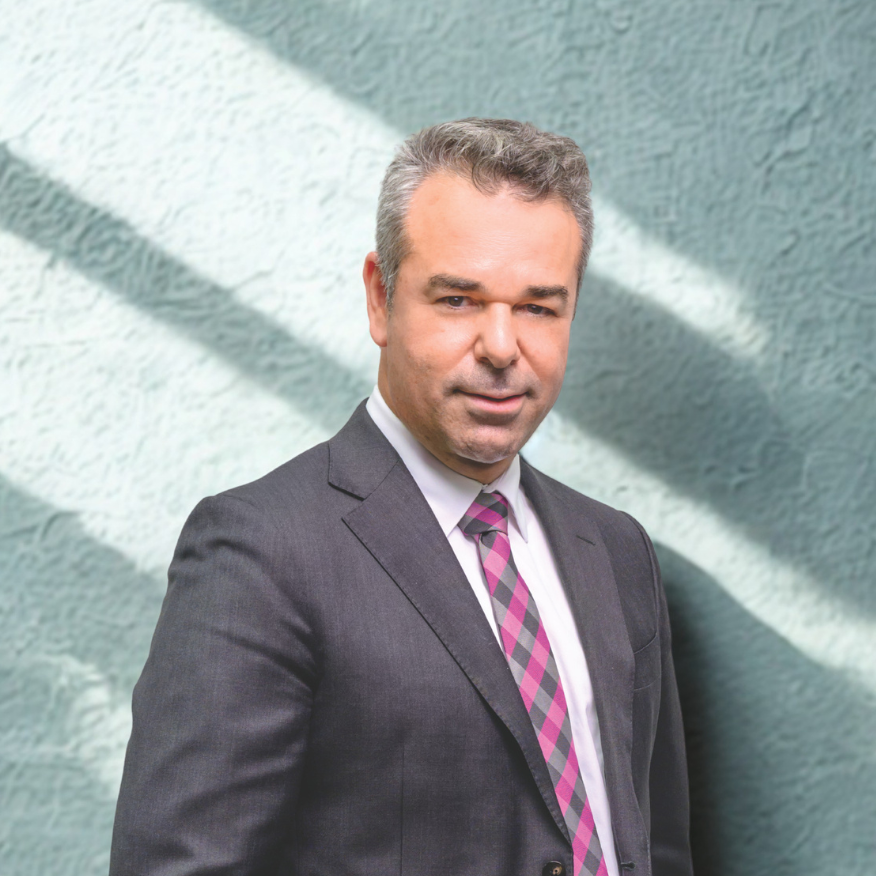
Photo credit: Daemon Baizan
 What advice would you give to business leaders about choosing or working with lawyers?
 The advice I would give is that the businessperson be comfortable with their counsel … because the attorney-client relationship is one built off of trust. You certainly want to have a good rapport with someone where trust is [such an important] issue.
 As Georgia State Bar president, you’ve identified priorities concerning AI. What excites you and what makes you a little bit apprehensive?
What excites me with artificial intelligence is how emerging technologies can improve the practice of law with our work product and how we research. For some time, we’ve been using AI for research tools, whether it’s LexisNexis or Westlaw. Now we are seeing the further development of these technologies. It excites me if that improves the attorney’s ability to deliver the work product to the client, to communicate and effectively advocate to the court. It gives me pause that there is still room for error. Machines aren’t perfect, and we have to be careful and diligent to make sure that what we’re putting out there as our work product accurately states the law.
What lessons from the courtroom have carried over into your leadership?
When you’re in litigation, it’s important to listen to your client, to arguments and to witnesses. One of the things that carries over is listening to the concerns of your constituency and, … just as a litigator would advocate the position of their client, making sure that you’re listening to your lawyer members and advocating for them at the bar. There’s another part to the purpose of our bar, which is to protect the public. So another thing that carries over from the courtroom, with respect to protecting the public, is wanting to get it right. When you’re in the courtroom, you’re … using the law to advocate for the result you want. At the bar, we’re using whatever tools we have available to make sure that while we’re advancing the practice of law, we’re also protecting the public.
When did you realize you wanted to step beyond litigation into leadership?
It was certainly a process. I think it was 2017 or so when I ran first for the board of governors. We had a retiring member in my circuit. I had been somewhat active with bar committees, and I decided I’d get more involved. Certainly, at that time, I had no idea that I’d be sitting in this seat now. I became more involved and chaired a committee on insurance. COVID hit, and so the committee ended up extending for a full year, and we traveled the state. We held town halls with other attorneys who were not on the board of governors. It was a hotly debated topic within the bar regarding whether or not attorneys should be required to carry certain types of insurance. So coming out of that service and having met attorneys from around the state, I was encouraged to move from chair leadership to the next level. [The next level was an] officer of the bar, and I answered that call. I’m glad I did.
What would you like your legacy as bar president to be?
This goes back to the priorities we have. I can’t do it alone, but I want to leave our bar and our profession in a little bit better space than it was when I took the seat. I think it’s a great bar and I believe I practice in the best profession – but there’s always room for improvement. Whether it’s through committee work that will bring more focused initiatives to the bar, or advancing principles around the rule of law, which you’re hearing a lot about now, I want to make sure our profession generally stays strong – not just for lawyers, but for our country’s advancing the rule of law. The legacy that I want to leave is that I was able to improve upon the great work we do at the bar.