Quiet Architects of Progress
For every election cycle where Georgia receives national attention, there are thousands of hours of quiet work behind the scenes.
 When we talk about Black history in Georgia, the conversation naturally gravitates to figures like John Lewis and Martin Luther King Jr. Their stories anchor our collective memory and inspire us to do good. But if there’s one thing you learn growing up in Georgia, it’s that progress is never the work of one person. History is forged by hands, minds and sacrifices that don’t always make it into the textbooks.
I want to shed light on some hidden figures in Georgia’s Black history whose work shaped the political, cultural and economic landscape we know. They remind us that leadership may not always come with a spotlight, but it always leaves a mark.
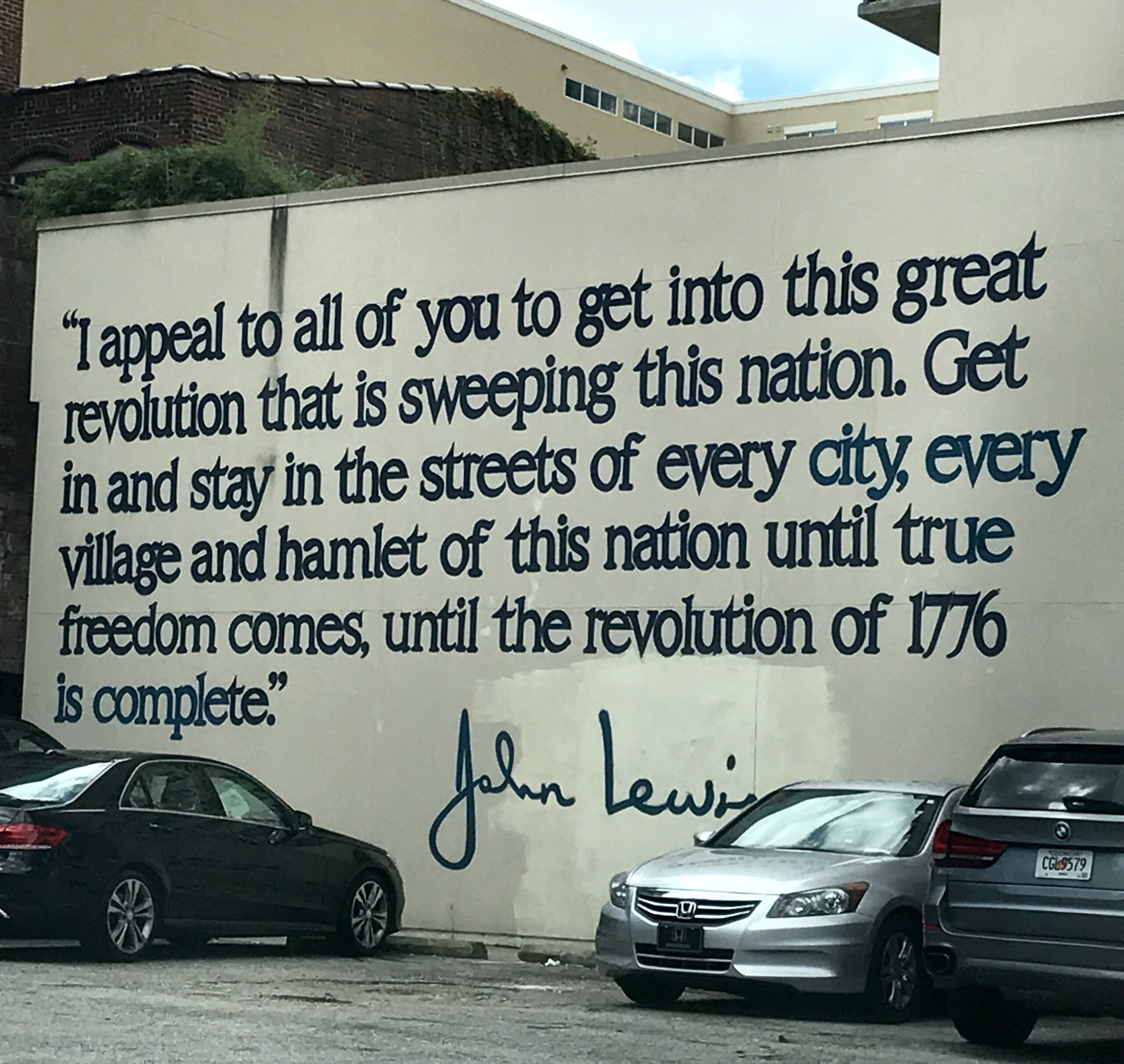
Quote by John Lewis, 1963 in Washington, DC on a wall in Atlanta G. Photo credit: Julia Roberts
For example, before Georgia saw fully funded public education systems for Black students, there were the Jeanes Supervisors – Black women educators who traveled rural counties during the early 20th century to train teachers, strengthen curricula and ignite community development.
One of Georgia’s most impactful figures in the movement was Helen A. Whiting, a professor from Tuskegee Institute in Alabama, who coordinated the Jeanes program in Georgia in the 1930s. She developed curriculum guidelines to standardize teaching in schools and held demonstrations across the state for teachers and Jeanes Supervisors. Her work helped lay the academic foundation that enabled future Civil Rights activists to organize, strategize and lead.
Around the same time, A.T. Walden, Georgia’s first Black lawyer appointed to be a judge after Reconstruction, was leading the charge on securing equal rights for all people across the state. Walden understood that progress isn’t possible without access, including access to justice, access to opportunity and access to the ballot. He fought for equal teacher pay and helped dismantle whites-only primaries in Georgia. His legal battles paved the way for the political changes that allowed future leaders to step onto a more level playing field.
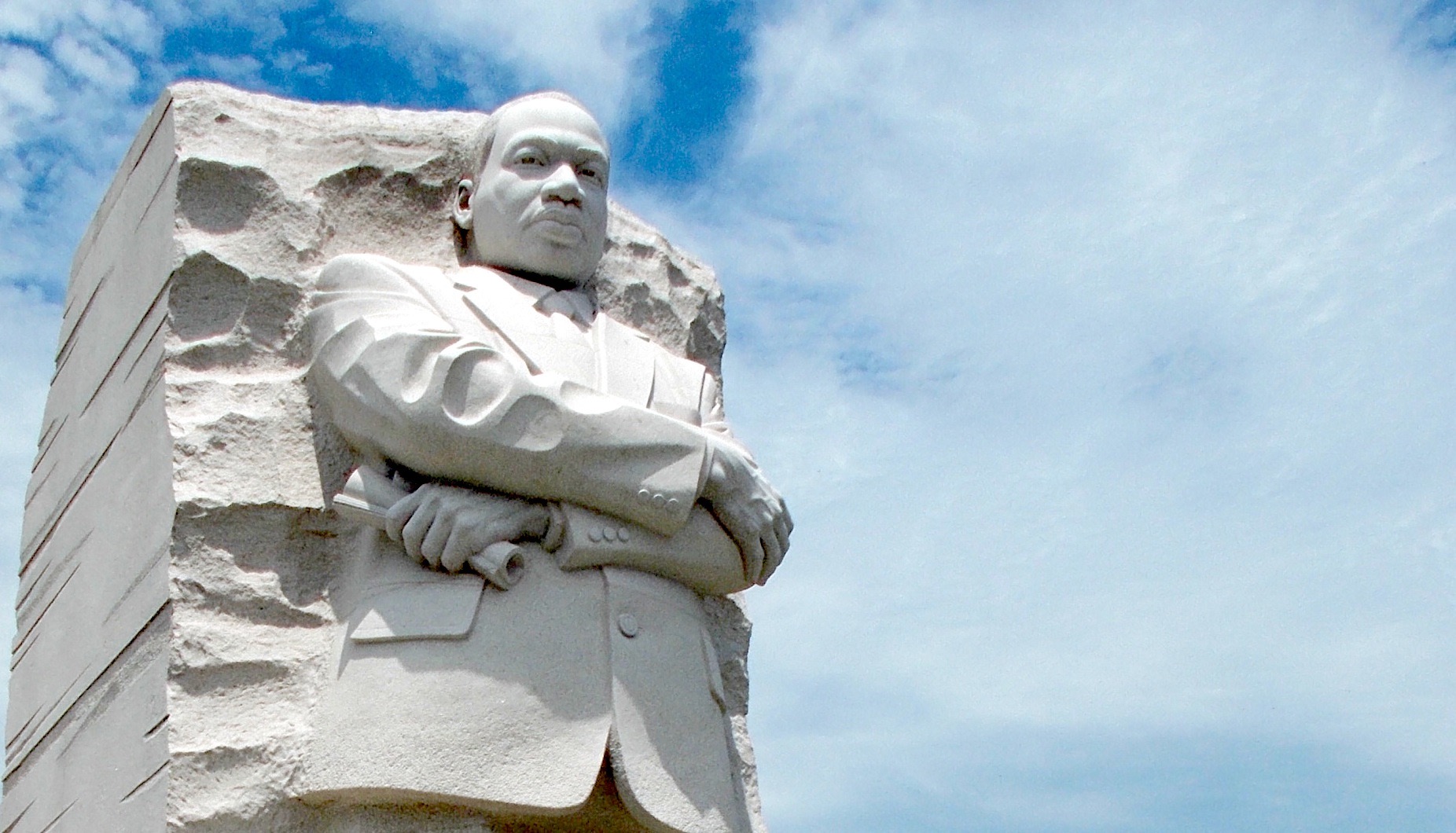
Dr. Martin Luther King, Jr., statue, Washington DC. Photo credit: Julia Roberts
To quote legendary Atlanta Mayor Ivan Allen, Jr.: “Much of Atlanta’s outstanding pioneer progress and better race relations was due to the effective leadership of ‘Colonel’ Walden. His leadership laid the groundwork for much that is now an accepted fact.”
One of many notable leaders who benefitted from Walden’s efforts is celebrated author, playwright and first Poet Laureate of Atlanta Pearl Cleage, a woman who spent many years writing about Atlanta communities by listening to and advocating for neighborhoods often overlooked by political power brokers.
In the 1970s and ’80s, when Atlanta was navigating rapid change and expanding Black political power, Cleage worked behind the scenes helping residents understand their rights and their leverage. Her cultural work today is inseparable from her early political work, highlighting the deep connection that storytelling and civic power share. Today, she still serves as Distinguished Artist in Residence at Atlanta’s Alliance Theatre.
Finally, I want to recognize the Black leaders writing history today. For every election cycle where Georgia receives national attention, there are thousands of hours of quiet work behind the scenes. Long before voter registration campaigns became hashtags or national headlines, Black women in Georgia’s churches, civic clubs and sororities were doing that work.
Inspired by people like Evelyn Gibson Lowery, founder of sclc/ W.O.M.E.N. Inc, Black women continue to play an instrumental role in democracy today. While Evelyn’s husband, Joseph Lowery, was a visible Civil Rights leader, she built an organization dedicated to youth leadership training, and education in political issues and Black history. She organized conferences and community outreach efforts that helped create new generations of engaged voters.
Her work reminds us that political power is not built overnight at political rallies, but over years and decades at kitchen tables, church basements and community centers.
In politics, we often focus on the candidates and the headlines. But history is shaped just as much by those who never appear on a ballot. The hidden figures of Georgia’s Black history show us that leadership doesn’t always come with a spotlight. Real change comes from steady work, community trust, vision without vanity and remembering that a life of service is a life well lived.
Most of us won’t have our names in history books, but if we simply commit to making our communities better than we found them, we will all leave a permanent mark on the world.
Tharon Johnson is founder and CEO of Paramount Consulting Group.