100 Years of the High Museum
 It was 100 years ago this month that the High Museum opened in Atlanta. It has since guided the city to become the cultural capital of the South. Today it holds over 20,000 pieces in its collection and receives more than 400,000 visitors a year. It’s a big part of Atlanta’s nonprofit arts and culture sector, which generates nearly $900 million in economic activity.
For me, the High was always an emblem of “cool” Atlanta, kind of like the Omni and the Saturn-shaped Hyatt Regency downtown. Its original location was in the home of Harriett “Hattie” High on Peachtree Street. But it later expanded to become part of the Woodruff Arts Center campus, which also includes the Atlanta Symphony Orchestra and Alliance Theatre. When the new Richard Meier-designed building opened in 1983, it was like a beautiful sci-fi vision dropped into Midtown. Its breathtaking design won the American Institute of Architects (AIA) Honor Award in 1984 and was a factor in Meier receiving the Pritzker Prize that year. In 1991, the American Institute of Architects cited it as “one of the 10 best works of American architecture of the 1980s.” It really put Atlanta on the map as a cultural city.
The Meier design was inspired by Frank Lloyd Wright’s Guggenheim Museum in New York, with its vast open spaces, natural light and curving walkways and ramps. I wish more museums were inspired by the Guggenheim; it’s a welcome departure from the right angles and steps-focused style of typical museums, which can feel repetitive and confining.
I treasured my trips to the High as a child and through the years and have enjoyed watching it evolve into a mix of modern art, classics, folk art, photography and design exhibits – balancing themes and boosting community engagement with jazz nights and other events. I fretted when Renzo Piano redesigned and expanded the High in 2005. But he left the Meier building intact while more than doubling the footprint, winning the Gold Medal for Italian Architecture from the Triennale of Milan in 2006.

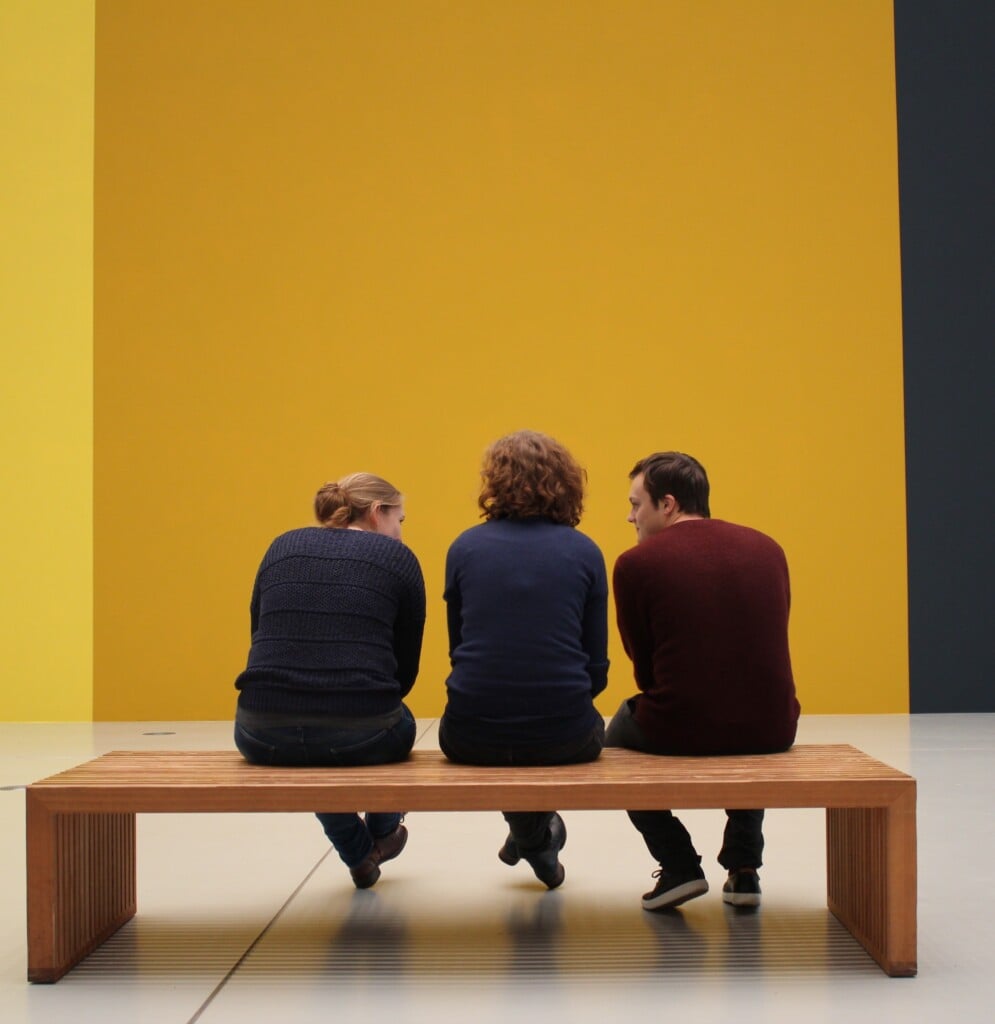
Photo credit: Marco-Lachmann
I cheered when the High landed major touring exhibitions like Vermeer’s Girl with a Pearl Earring in 2013, Yayoi Kusama’s Infinity Mirrors in 2018 and Photography as a Way of Life: Minor White, Aaron Siskind, and Harry Callahan this month, and when it partnered with the Louvre for exhibits from 2006 to 2009. It is also known nationally for its folk art collection and is the repository for many of Howard Finster’s works. It has benefited from the leadership of Michael Shapiro (2000 to 2015) and Randall Suffolk (2015 to the present), bringing consistency to the programming.
The High is now positioning itself to enthrall people for another 100 years. The museum plans ongoing celebratory programming, anchored by the Centennial Block Party on Peachtree Street between 15th and 16th Streets on October 18, which will feature music, food and activities and a talk in Hill Auditorium celebrating 100 years of art in Atlanta. The High is offering free admission to all Atlanta Public Schools for K-12 field trips throughout the 2026-2027 school year and will produce a book featuring 100 large-scale reproductions of landmark artworks in the museum’s collection. (I hope Sol Lewitt’s beautiful Wall Drawing 729 is included.)
For me, the High was always an emblem of “cool” Atlanta, kind of like the Omni and the Saturn-shaped Hyatt Regency downtown.
The High’s collection galleries will debut new installations and acquisitions including a rare painting by Jacob Lawrence, a quilt by Carolyn Mazloomi, an expansion of its African art collection and a work by Grandma Moses. The High will also introduce more than 200 additions to its collections of photography, contemporary design and contemporary art.
I hope all this lights a fire under Atlanta’s art scene. I have long envied the Art Basel Miami Beach fair – which brings approximately 80,000 visitors each December. An event like this is not out of reach; we can do a better job of coordinating and promoting our own cultural resources. Anchored by the High and Woodruff, they are considerable and growing. Consider Atlanta Beltline Art, which has grown since its creation in 2010 to include more than 100 sculptures, art installations and murals.
This year, the Atlanta Art Fair will return for its third edition at Pullman Yards. The Other Art Fair will make its debut this month at Enspire Mercantile (presented by Saatchi Art). MOCA GA will relocate to the Goat Farm Art Center in West Midtown, and CTR Culture Studios, a 10,000-square-foot artist space, opened in May at the former CNN Center.
Congratulations to the High. I hope the centennial presents a chance to double down on that energy that swept into Midtown 100 years ago and rouse a sleeping giant. 
Ben Young is Editor-in-Chief and Publisher of Georgia Trend. |  byoung@georgiatrend.com