Catching up with… Jill Savitt
President and CEO, National Center for Civil and Human Rights
The National Center for Civil and Human Rights is an immersive museum and center in Downtown Atlanta that honors and explores the history of domestic civil rights and global human rights. The Center is home to the papers of Martin Luther King Jr. and has recently reopened after a privately funded $57.6 million renovation.
Why is the expansion of the center so critical at this time?

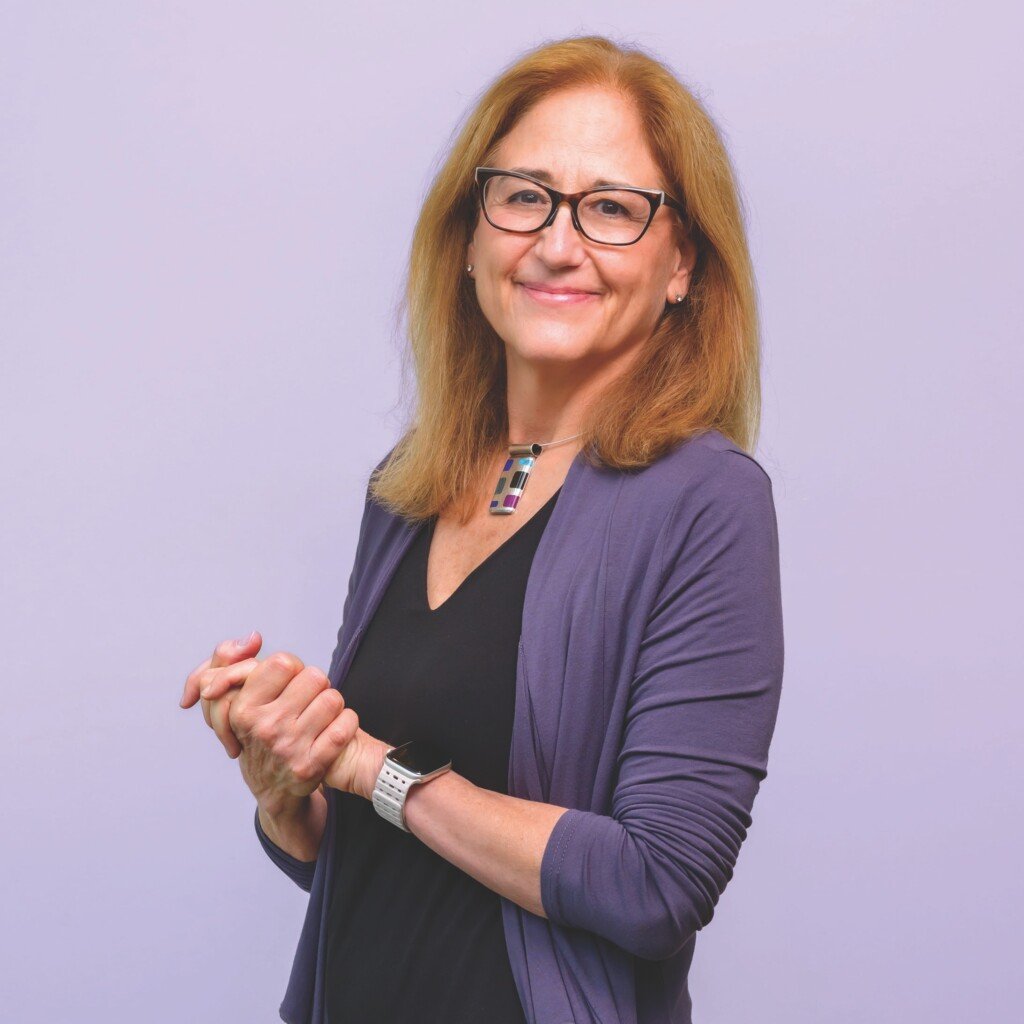
Jill Savitt, director of the Atlanta Civil Rights Museum. Photo credit: Daemon Baizan
We tell the history of civil rights in the United States, which, in our view, is the history of democracy. It’s about who gets to participate, who has a say. We tell the story of Americans working together to expand human freedom; it’s a really important history to tell in this country – the idea of democracy and the values of democracy have been one of our country’s greatest exports over time.
We used to just tell about the U.S. Civil Rights Movement, but this expansion allows us to go back in time and set up why the Civil Rights Movement of the ’50s and ’60s was so transformational and consequential. We do that by telling the history of the Reconstruction Era. The expansion allows us to tell a longer, larger story about how people, over time in this country, have come together using nonviolence and the levers that democracy provides to allow more people to participate.
 What are some of the new exhibits as a result of the expansion?
 We’ve added a section on Black Power, what it was and how it evolved from the Civil Rights movement, largely from the Student Nonviolent Coordinating Committee (SNCC). The King Gallery has been entirely reimagined. Its location has moved and been designed entirely in black and white; it’s like standing in a photograph.
The new gallery on the Reconstruction Era is interesting for our lives today because Reconstruction is one of those places where the narrative of history has been contested. We’ve seen museums under pressure to have a very triumphal narrative about American greatness that wants to downplay some of the more painful parts of American history. We take a different view. We believe that American greatness is often embodied by the response to the painful parts of our history. If you take out the painful parts, you don’t get the triumphal, very American response that can only be described as “great” as in “greatness.” If you don’t talk about slavery, you can’t talk about abolition.
How do you encourage visitors to engage with the ideas in ways that are sustainable in their lives and in their community?
It was a challenge to crack the code on that. People have short attention spans. In our Action Lab, we ask visitors to take BuzzFeed-style quizzes about their traits, outlook and interests. Their score tells them what kind of ‘changemaker’ they might be.
Another display provides tactics they might use – join, act, support, learn. Then there’s a display that [lists] passions, because people need to find the issues they care about. This isn’t advocate training; we’re trying to give a sense of possibility and show that every action, no matter how big or small, matters.
How do you find encouragement and hope when the news is discouraging and the days are long?
First, ever since I was a kid, I have always had a strong dislike of bullies. And standing up to bullies, for me, is very energizing. I think it’s so important. I think bullies are so wrong in how they approach the world, that ‘might makes right.’ The idea of working with other people to counter that is incredibly energizing.
Secondly, I’ve spent, before I took this job, 30 years in genocide prevention and mass atrocity prevention. I worked mostly with survivors of mass atrocities who had gotten into advocating for genocide prevention. I have to say that these people, if you could lose your family, your home, and still find the courage and the will to try and fix the world for other people, I, who have had a very blessed life, don’t really have an excuse. I have taken so much heart, inspiration and courage from people who lost nearly everything and wanted to get into the business of fixing the world as they saw fit.